Birdwatching Safari in Ruaha National Park
A birdwatching safari in Ruaha National Park combines slow game drives, guided walks and time at the water to work a list of well over 500 species, including central Tanzanian endemics found almost nowhere else. The green season from November to April brings migrants and breeding colour, making it the richest time to bird. Ruaha is one of Tanzania’s largest national parks, in the south-central Iringa Region, and a leading birding destination on the southern safari circuit.

What a Birdwatching Safari in Ruaha Involves
A birdwatching safari is less about covering ground than about slowing down. Where a general game drive presses on toward the next predator, a birding outing stops often, works a stretch of riverbank thoroughly, and gives the guide time to call birds in or wait for a skulking species to show itself. You might spend twenty minutes on a single patch of scrub, which sounds slow until you realise how much turns up in it.
Most birding in Ruaha happens on the same drives and walks everyone else does, simply with the emphasis shifted. Ask your camp in advance that birds are your priority, and a good guide will change the route, the pace and the stops accordingly. Because the park is so quiet, there is no pressure from other vehicles to move along, which suits birding perfectly on a Ruaha safari.
Birding by Vehicle on a Game Drive Safari
The vehicle is a surprisingly good birding platform. It acts as a hide, since birds tolerate a vehicle far closer than a person on foot, and the raised, open sides give clear sightlines in every direction. Working slowly along the riverine strip, stopping at fruiting or flowering trees, and pausing wherever mixed feeding parties are moving through the canopy will build a list quickly.
The trick is to have the guide drive at birding pace rather than game-viewing pace, with the engine off at stops so you can hear calls. Rollers, bee-eaters, hornbills and raptors are all readily seen from the vehicle, and the open country lets you pick out perched birds at distance. On a birdwatching safari, a morning spent working a few kilometres of river thoroughly beats a long drive covering ground.
Mixed feeding parties are worth understanding, since they account for a large share of a good morning’s list. Small birds of several species move through the woodland together, feeding as they go, and where one appears a dozen others usually follow within a few minutes. A guide who spots the leading edge of such a party will stop and let it come through the trees around the vehicle, which can produce more species in ten minutes than an hour of driving. Learning to watch for that movement in the canopy, rather than scanning only the open ground, changes how productive your birding feels.
Walking Safaris for Close-Up Birding

Getting out on foot changes the birding entirely. A guided walking safari, led by an armed ranger, lets you into the thicker riverine vegetation and along the sand riverbeds where the smaller, skulking species live, birds you would drive straight past. On foot you hear far more, and the guide can track a call to its source rather than losing it behind the engine.
Walking is particularly good for the understory birds, the robins, warblers and babblers that keep low in cover, along with the sunbirds working flowering shrubs at eye level. The pace is slow and quiet, which is exactly what birding wants. Where camps offer walks, building one or two into a birding trip adds species that vehicle-based outings simply miss on a Ruaha safari.
Ruaha’s bird list runs past 570 species because the park sits where East African acacia country meets southern miombo. Few places let you work eastern and southern birds into the same morning list.
Birding From Camp and the Waterholes on Safari
Some of the best birding happens without going anywhere. Camps in Ruaha sit in productive habitat, usually along the river or a sand tributary, and an hour with coffee on your veranda or around the mess area can turn up a long list. Starlings, hornbills, weavers and barbets become familiar residents, and the trees around camp often hold species you will not see elsewhere.
The waterholes and river pools are the other high-value spots. Because everything must drink, a patient sit at the water produces a steady procession of birds coming in, along with the herons, storks, plovers and kingfishers that live there permanently. Some camps have hides or raised platforms overlooking water, which let you watch without the movement of a vehicle, and these are worth asking about when you book a birdwatching safari.
Ruaha’s Signature Birds to Look For on Safari
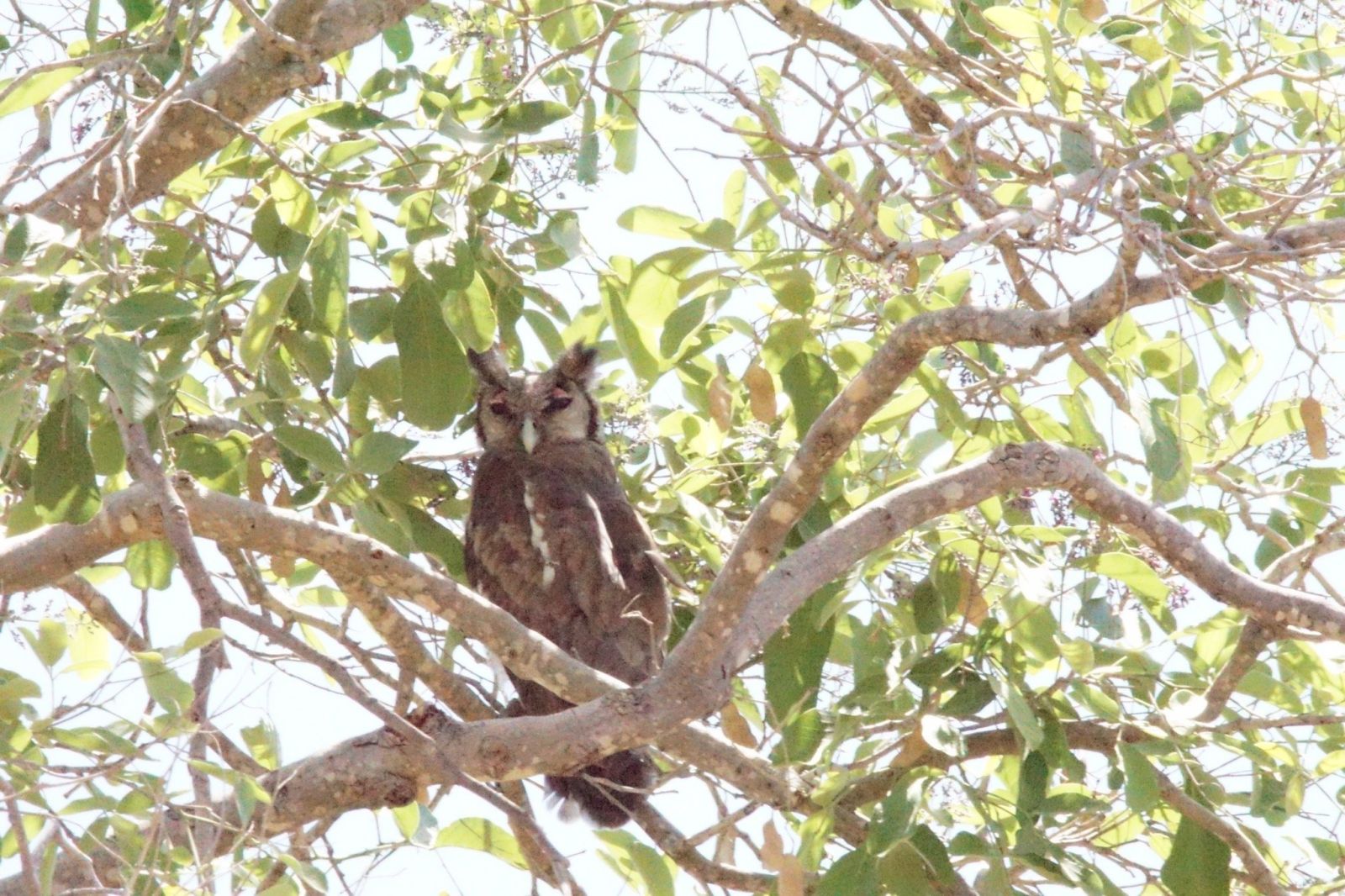
Every birding trip here has a target list, and Ruaha’s headline birds are the central Tanzanian specialities. The Tanzanian red-billed hornbill, described from this area and sometimes called the Ruaha hornbill, is the one most closely tied to the park. The ashy starling, a slim grey bird restricted to this part of Tanzania, and the yellow-collared lovebird, which moves in noisy green flocks, complete the trio most birders want.
Beyond the endemics, the park delivers raptors in strength, with fish eagles along the water, bateleurs quartering the plains and several threatened vulture species, alongside the Goliath heron in the shallows and a good range of rollers, bee-eaters and kingfishers. The pull of Ruaha is the crossover, where the acacia country of East Africa meets southern miombo, so you tick birds from two regions on one Ruaha safari.
The miombo woodland deserves particular attention from anyone building a serious list. This habitat holds its own specialised birds, species tied closely to those trees and seldom found in the acacia country a few kilometres away, and many visitors never make it into that part of the park because the game viewing is better along the river. If your priority is species rather than sightings, ask your guide to spend a morning in the miombo, since the birds you find there will be quite different from anything the riverine strip produces and will fill obvious gaps in a Tanzania list.
Choosing a Birding Guide for Your Ruaha Safari
The guide matters more for birding than for almost anything else. A general safari guide will know the obvious species, but a genuine birder knows the calls, which is how most birds are located, and can tell you where a particular speciality has been reliably found. That difference can be worth dozens of species over a few days.
When booking, say clearly that birding is your focus and ask whether the camp has a guide with real birding knowledge, since not all do. Some camps and operators specialise in it and can pair you with the right person. It also helps to share your target list ahead of time, so the guide can plan routes around the habitats those birds want rather than working it out on the first morning of your birdwatching safari.
What to Bring on a Birdwatching Safari
Binoculars are the one item you cannot do without, and a decent pair transforms the experience, so bring your own rather than hoping to borrow. A field guide to East African birds, or a bird app on your phone, helps with identification and settles the inevitable debates. For photography, a long telephoto is needed, since birds rarely allow close approach, and a beanbag steadies it on the vehicle.
Otherwise the usual safari kit applies: neutral clothing, warm layers for the cold early starts, sun protection, and a notebook or app if you keep a list. Spare batteries matter, since birding produces a lot of shutter actuations. Most of all, bring patience, since the best birds often come to those willing to wait quietly at a good spot on a Ruaha safari.
Best Time of Year for Birdwatching Safaris in Ruaha
The green season from November to April is the standout time for birds. Palearctic migrants from Europe and Asia arrive alongside intra-African migrants, swelling the list considerably, and resident birds move into breeding colour and become far more vocal and visible. The country is green, the light is dramatic, and the park is quiet. This is when a birdwatching safari is at its richest.
The trade-off is that this is the weakest time for big-game viewing, since the wildlife disperses with the water, so keen birders often accept quieter mammal sightings in exchange. If you want a balance, the shoulder around October and November catches the first migrants alongside still-decent game concentrations. The dry season from June to October still birds well, particularly along the river, so no time of year is a bad time to look.
Frequently Asked Questions
How many bird species can you see in Ruaha?
The park holds well over 500 recorded species, with many sources citing more than 570. A dedicated birding trip of several days in the green season can produce a very long list, since the park sits where East African and southern African bird zones overlap, bringing species from both regions together in one place.
Do I need a specialist birding guide?
Not strictly, since a general game drive turns up dozens of species anyway, but a guide with real birding knowledge makes an enormous difference. They know the calls, which is how most birds are located, and where particular specialities have been reliably found. Say birding is your focus when booking and ask whether the camp can pair you with such a guide.
What are Ruaha’s must-see birds?
The central Tanzanian specialities top most lists: the Tanzanian red-billed hornbill, described from this area and sometimes called the Ruaha hornbill, the ashy starling and the yellow-collared lovebird. Beyond those, the raptors are strong, including fish eagles, bateleurs and several threatened vultures, along with the Goliath heron along the water.
Can you bird on foot in Ruaha?
Yes, where camps offer guided walking safaris, which are always led by an armed ranger. Walking gets you into thicker riverine vegetation and along sand riverbeds where smaller, skulking species live, and you hear far more on foot than from a vehicle. Building one or two walks into a birding trip adds species that drives miss.
How much does a birdwatching safari cost?
Birding happens on standard game drives and walks, so the cost is that of any Ruaha safari, though a private vehicle or specialist guide may carry a premium. Park entry is currently around 30 US dollars per non-resident adult per 24 hours before 18 percent VAT. A guided walk carries its own fee, often around 20 to 40 dollars per person. Confirm current fees with TANAPA before you travel.
Plan Your Ruaha Safari
Getting a birding-focused trip right depends on the guide, the season and being placed in the right habitats, all of which are easier with local advice. The safari companies and tour operators listed on this website run birdwatching safaris across Ruaha, and they can time your trip for the migrants and pair you with a guide who knows the calls and the specialities.
Whether the budget is tight or open, the drives, walks, flights and park bookings are handled in the background so none of the admin lands on you. Want a proper quote, or just a steer on timing for the birds? Reach out to the operators listed here, and a real person, not a bot, will get back to you.