What Birds Can Be Seen in Ruaha National Park?
Ruaha National Park holds well over 500 bird species, with many sources citing more than 570, including central Tanzanian endemics like the Tanzanian red-billed hornbill, ashy starling and yellow-collared lovebird, along with raptors, waterbirds and colourful bushveld species. Birding is best in the green season from November to April when migrants arrive. Ruaha is one of Tanzania’s largest national parks, in the south-central Iringa Region, and a leading birding destination on the southern safari circuit.

Ruaha’s Endemic Birds and Why the Park Is So Rich
The prize for many birders on a Ruaha safari is the set of central Tanzanian endemics. The best known is the Tanzanian red-billed hornbill, sometimes called the Ruaha hornbill, whose scientific name nods directly to the park and which was described from this area. Alongside it live the ashy starling, a slim grey bird found only in this part of Tanzania, and the yellow-collared lovebird, a small bright parrot that moves in noisy flocks. The Tanzanian masked weaver rounds out the local specialities.
The reason Ruaha holds so many birds comes down to where it sits. The park lies where the acacia savannah of East Africa meets the miombo woodland of the south, so it draws species from both zones into one place. That overlap, the same crossroads that gives the park its unusual mammals, produces a bird list far longer and more varied than a single habitat could. A patient birder here ticks off eastern and southern species side by side.
The Tanzanian red-billed hornbill deserves a closer look, since it is the bird most associated with the park. It was described from this area, and its scientific name points straight to Ruaha. There is a gentle debate among ornithologists about whether it is a full species or a form of the more widespread red-billed hornbill, but for a visiting birder that hardly matters, since seeing this handsome black-and-white hornbill with its bright bill in its home country is a tick worth having either way. The birds are easy to find, often in pairs or small groups, and their calls carry through the bush.
Raptors and Birds of Prey on a Ruaha Safari
Ruaha is strong on raptors. The African fish eagle calls from the trees along the Great Ruaha River, its ringing cry one of the signature sounds of the water. The bateleur quarters the plains on its distinctive tilting flight, and long-crested eagles perch on dead branches watching the ground. In the green season, the park hosts migrant falcons, including Eleonora’s falcon around December and January, which draws keen birders specifically. Ruaha is also an important refuge for several threatened vultures, among them the hooded, white-backed, white-headed and Rüppell’s vultures, all of which have declined sharply across Africa. Spotting a raptor on a Ruaha safari is rarely a matter of luck, since the park’s open country and healthy prey base support them well.
Waterbirds Along the Great Ruaha River
The river and its pools are the place for waterbirds. The Goliath heron, Africa’s largest heron, stalks the shallows, while kingfishers of several kinds work the banks, from the giant kingfisher down to the smaller jewel-coloured species. Egrets, storks, plovers and the emerald-spotted wood dove all use the water’s edge, and a slow drive along the river in the dry season turns up a steady procession of them as they come to drink and feed. For a birder, the riverine strip is the most productive habitat in the park, and it doubles as the best game viewing, so the two interests overlap neatly on a birdwatching safari.
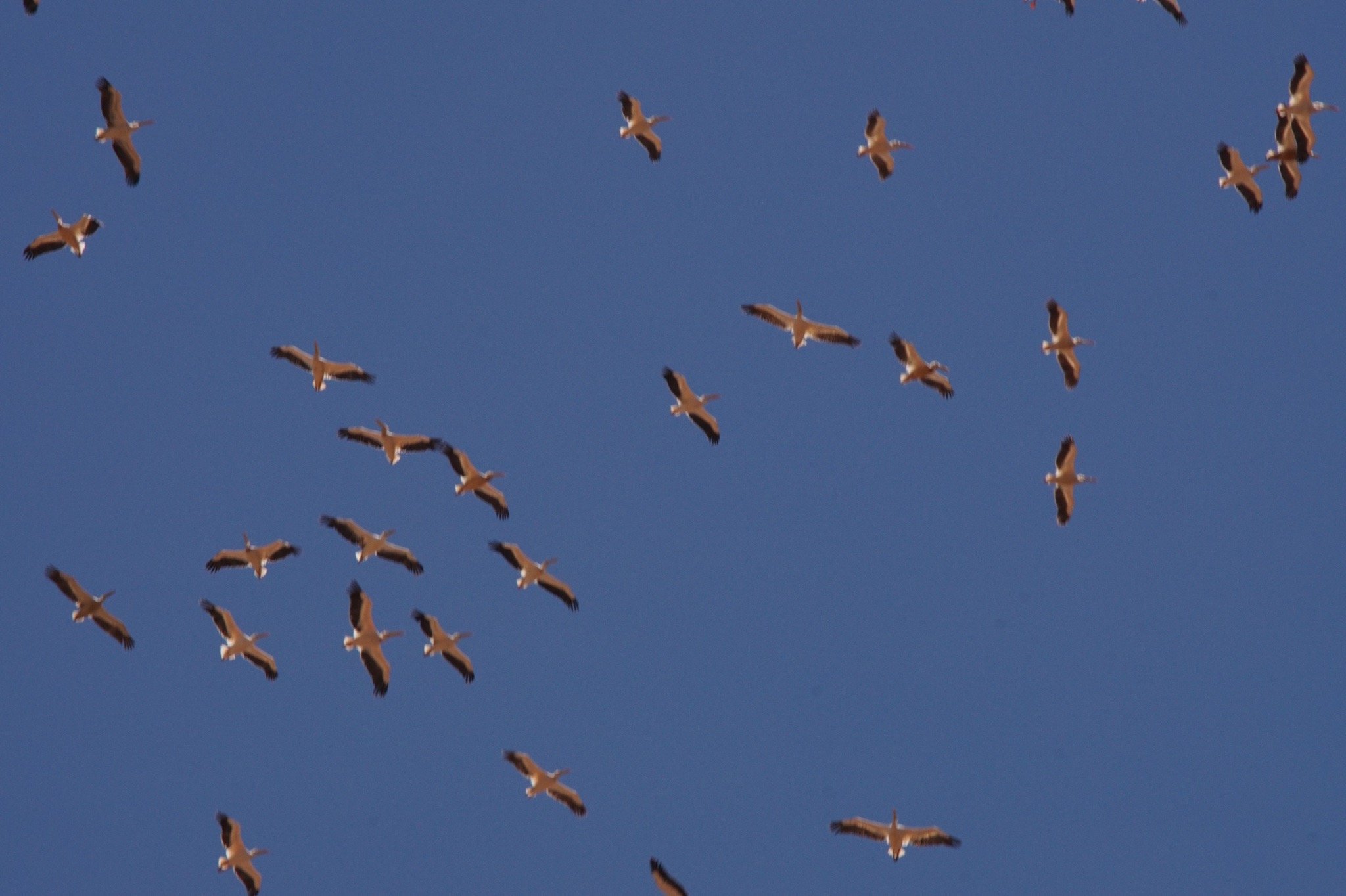
The river also rewards an early start. In the soft light of morning, herons and storks work the shallows while kingfishers dart along the banks, and the fish eagles begin calling from the tall trees. As other animals come to drink, the water’s edge becomes a stage where birds and mammals share the scene, so a patient hour parked by a good pool often delivers both a long bird list and a steady stream of game. In the dry season, when the river shrinks and everything funnels to the remaining water, this concentration is at its most rewarding.
Ruaha’s bird list runs past 570 species because the park straddles two of Africa’s great habitat zones. Few places let you tick eastern and southern birds on the same morning drive.
Woodland and Bushveld Birds in Ruaha
Away from the water, the woodland and bush hold their own cast. The crested barbet, with its persistent trilling call, is a characteristic sound of the southern bush, and the southern ground hornbill strides through the grass in small family parties. Rollers add colour, from the lilac-breasted roller to the racket-tailed and rufous-crowned kinds, and Meyer’s parrot, the white-bellied go-away bird, Dickinson’s kestrel and the violet-crested turaco all reward attention in the trees. Bee-eaters, sunbirds and hoopoes fill out the smaller birds. On a Ruaha safari, even a slow hour for mammals stays busy for anyone watching the bush for birds.
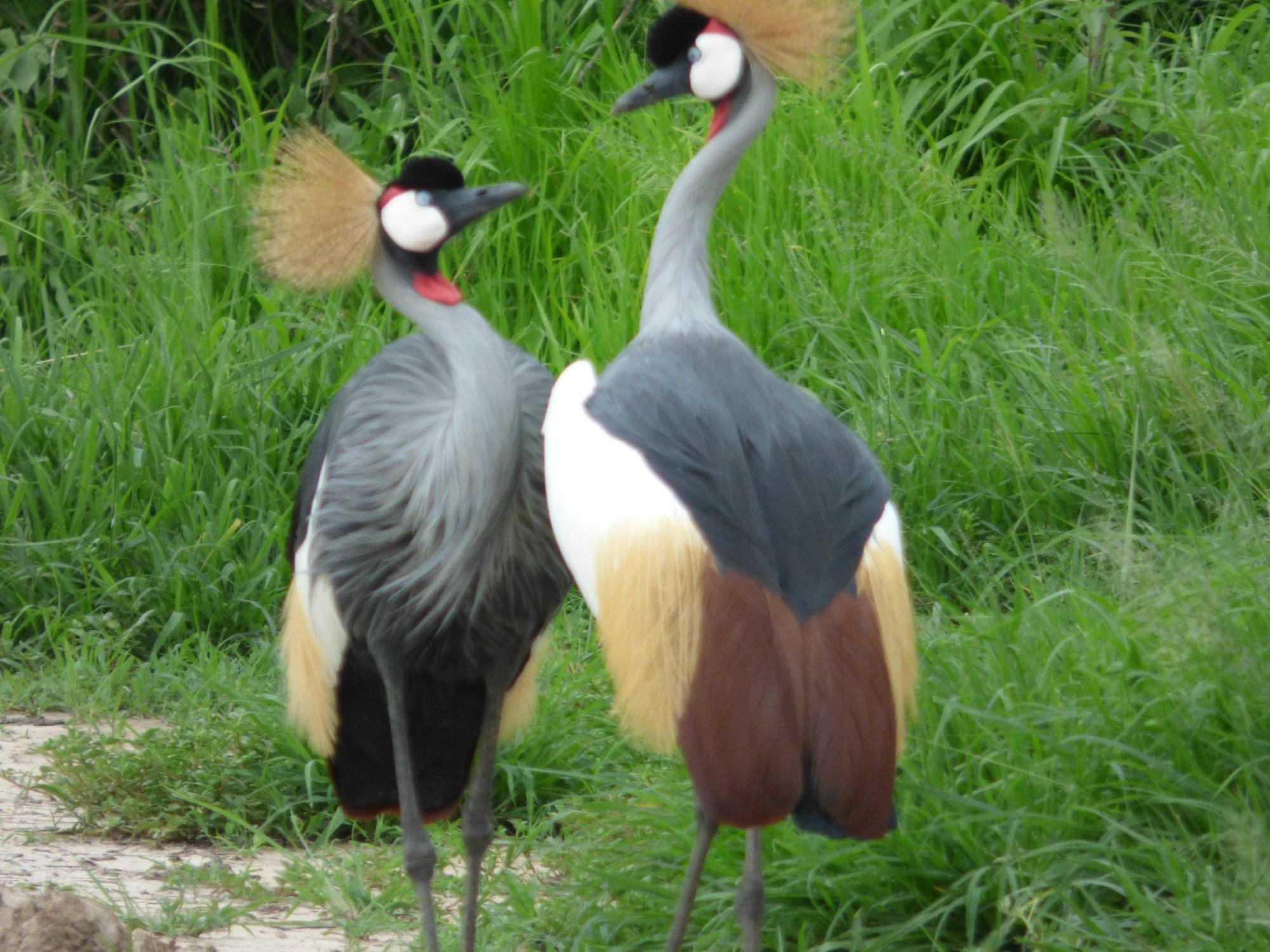
Endemics. Tanzanian red-billed hornbill, ashy starling and yellow-collared lovebird, the central Tanzanian specialities birders come for.
Raptors. African fish eagle, bateleur, long-crested eagle, migrant falcons and several threatened vultures.
Waterbirds. Goliath heron, kingfishers, egrets, storks and plovers along the Great Ruaha River.
Bush and woodland. Crested barbet, ground hornbill, rollers, Meyer’s parrot, turacos, bee-eaters and sunbirds.
Migratory Birds and the Best Birding Season
Timing shapes the birding more than anything. The resident birds are present year round, but the list swells in the green season from November to April, when Palearctic migrants from Europe and Asia and intra-African migrants arrive. This is when the count peaks and many resident birds move into breeding colour, so a green-season birdwatching safari is the richest of the year. The stretch from around October into January is especially good, overlapping the tail of the dry season with the first arrivals, so you pair decent general game with an excellent bird list. Bring binoculars whenever you visit, since even the dry months turn up plenty along the water.
Birdwatching Safaris and Where to Look in Ruaha
You do not need a specialist trip to enjoy the birds, since a normal game drive turns up dozens of species, but a dedicated birdwatching safari gets the most from the park. Guides who know the calls and the good spots can find the endemics and the specialities that a general drive would pass. The riverine strip, the woodland and the open plains each hold different birds, so working a range of habitats builds the longest list. Some camps also have hides or tree houses positioned near waterholes, which let you watch birds and other wildlife come to drink without the movement of a vehicle. Guided walks along the riverbanks add close, quiet birding on foot.
What Makes Ruaha’s Birdlife Unique
What sets Ruaha apart from other birding parks is the mix rather than just the number. The transitional location brings together species that rarely share ground, so the list reads like two regions combined, and it includes birds you would otherwise have to visit both eastern and southern Africa to see. Add the handful of central Tanzanian endemics found in and around the park, and Ruaha offers birders something genuinely distinctive. For anyone building a Tanzania bird list, a Ruaha safari delivers species that the northern parks simply do not hold.
Best Time for a Birdwatching Safari in Ruaha
The green season from November to April is the standout time for birds, when migrants arrive and the residents breed, giving the fullest and most active bird list of the year. This is the opposite of the best time for big-game viewing, which peaks in the dry season, so keen birders often accept quieter mammal sightings in exchange for the richer birding. If you want a balance, the shoulder around October and November catches the first migrants alongside still-decent game. Whenever you come, Ruaha’s resident birds keep a birdwatching safari rewarding, but for the full spectacle, plan for the green months.
Frequently Asked Questions
How many bird species are in Ruaha?
Ruaha holds well over 500 recorded bird species, with many sources citing more than 570. The high count reflects the park’s transitional location between the East African acacia zone and the southern miombo belt, which brings species from both regions together in one place.
What birds are endemic to Ruaha?
The central Tanzanian endemics found in and around the park include the Tanzanian red-billed hornbill, sometimes called the Ruaha hornbill and named after the area, along with the ashy starling and the yellow-collared lovebird. The Tanzanian masked weaver is another local speciality. These are the prized sightings for birders visiting Ruaha.
When is the best time for birdwatching in Ruaha?
The green season from November to April is best, when Palearctic and intra-African migrants arrive and resident birds move into breeding colour. This is the opposite of the peak game-viewing season, so birders often trade quieter mammal sightings for the richest birding. The October to January window pairs early migrants with still-decent general game.
Can you go birdwatching on a normal game drive?
Yes. A standard game drive turns up dozens of bird species without any special arrangement, so even visitors focused on mammals see plenty. For the endemics and specialities, a dedicated birdwatching safari with a knowledgeable guide, plus time in different habitats and at any hides the camp offers, gets far more from the park.
How much does a birding safari in Ruaha cost?
Birding happens on standard game drives and walks, so the cost is that of any Ruaha safari. Park entry for a non-resident adult is currently around 30 US dollars per person for each 24 hours before 18 percent VAT, with reduced rates for residents and East African citizens. Flights from Dar es Salaam have commonly run around 380 dollars per person each way, and accommodation ranges by tier. Confirm current fees with TANAPA before you travel.
Plan Your Ruaha Safari
Finding Ruaha’s endemics and specialities is far easier with a guide who knows the calls and the good spots, so this is a park where a birding-minded operator really adds value. The safari companies and tour operators listed on this website run birdwatching safaris across Ruaha through the green season and beyond, and they can time your trip for the migrants and put you in the habitats that hold the birds you want.
Whether the budget is tight or open, the days get shaped around your birding priorities, and the flights, park bookings and camp choices are handled in the background so none of the admin lands on you. Want a proper quote, or just a steer on timing for birds? Reach out to the operators listed here, and a real person, not a bot, will get back to you.