East-South African Vegetation Transition Zone
Ruaha sits on the transition zone where East African and Southern African plants and animals overlap, at the boundary between the Maasai steppe savannah and the eastern miombo woodland belt. That single fact of geography explains the park’s unusual species list, including greater and lesser kudu together and both striped and spotted hyena. Ruaha is one of Tanzania’s largest national parks, in the south-central Iringa Region, and the anchor of the country’s quieter southern safari circuit.
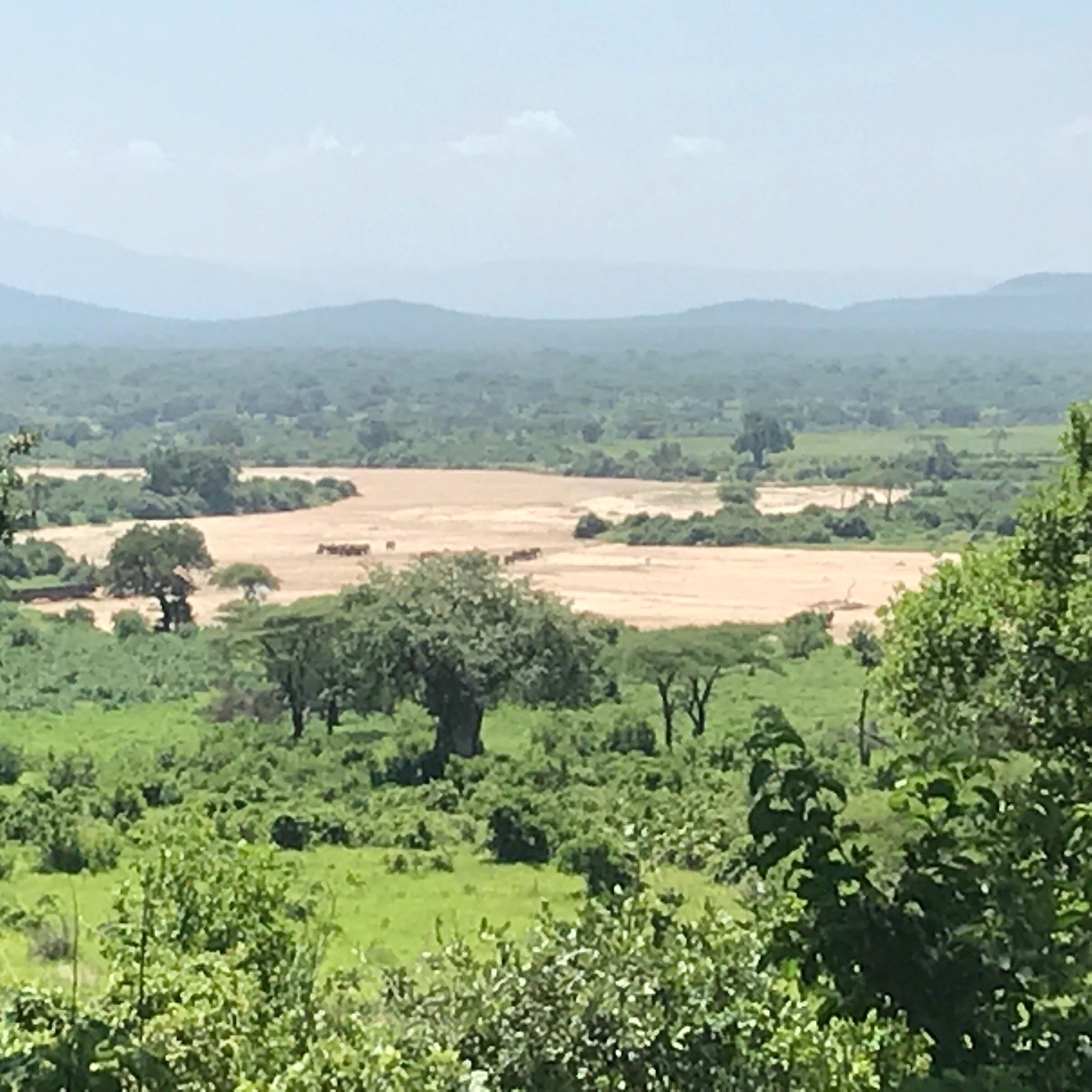
What the Transition Zone Means on a Ruaha Safari
Africa’s plants and animals are not spread evenly. Broad regions have their own characteristic communities, and East Africa’s acacia savannah, the country of the Maasai steppe, is a different world from the miombo woodland belt that runs across southern and south-central Africa. Most parks sit firmly in one or the other.
Ruaha sits on the line between them. The park lies at the boundary of these two great vegetation regions, so species from both spill into it and overlap, which is why a Ruaha safari turns up combinations you would otherwise need two separate trips to see. Something in the order of 1,650 plant species have been recorded here, a figure that reflects this overlapping position rather than any single unusually rich habitat.
Why Two Regions Meet Here on Safari
The reason comes down to terrain and elevation. The park spans a substantial range, from around 750 metres in the Great Ruaha valley to roughly 1,900 metres on the high ground in the west, and the Great Rift Valley crosses it, with an escarpment wall rising along the western side of the valley.
That variation stacks different conditions close together. The hot, dry valley floor suits the acacia and Commiphora bush characteristic of East Africa, while the cooler, higher ground above the escarpment carries the miombo woodland of the south. So rather than a gradual blend across hundreds of kilometres, the transition here is compressed into a single park, which is what makes it visible to a visitor on a Ruaha safari.
Two of Africa’s great vegetation regions meet inside one park boundary. That is why you can tick greater and lesser kudu on the same morning, which almost nowhere else allows.
Wildlife of the Overlap on a Ruaha Safari
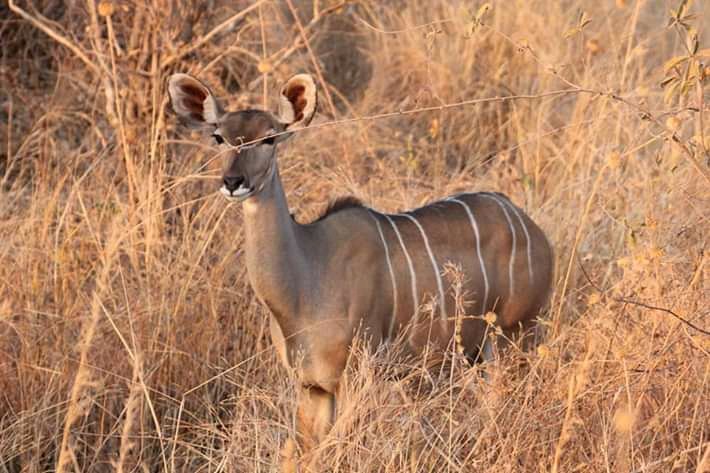
The clearest evidence of the overlap is in the animals, and the textbook example is the kudu. Greater kudu, with their spiralled horns, and lesser kudu, smaller and more delicately marked, have largely separate ranges across Africa, and Ruaha is the one park where both occur together. For many experienced safari-goers that pairing alone justifies the trip.
There are others. Sable and roan antelope, animals of the miombo south, share the park with Grant’s gazelle and impala from the eastern savannah. Both striped and spotted hyena are present, where most parks have only one. This mixture is the practical payoff of the transition zone, and it gives a Ruaha safari a species list that surprises visitors who thought they knew the East African cast.
Birdwatching in the Transition Zone
The same logic applies to birds, and arguably more strongly, since birds respond quickly to habitat. Ruaha’s list runs well past 500 species, with many sources citing more than 570, and the length of it owes a great deal to the park drawing from two regional avifaunas at once.
Miombo holds birds tied closely to that woodland, species you will not find in the acacia country a few kilometres downhill, while the thorn bush and riverine strip carry the eastern savannah birds. The park also has its own central Tanzanian specialities, including the Tanzanian red-billed hornbill described from this area, the ashy starling and the yellow-collared lovebird. For a birder, working both zones is how you build the list on a Ruaha safari.
This is why birders often rate Ruaha above better-known parks despite its remoteness. A trip to the northern circuit produces an East African list, and a trip to Zambia or Malawi produces a miombo list, whereas a single well-planned week here can draw on both. Tell your guide early that this matters to you, since the routes that maximise a bird list are not the routes that maximise big-game sightings.
Seeing the Transition on a Game Drive
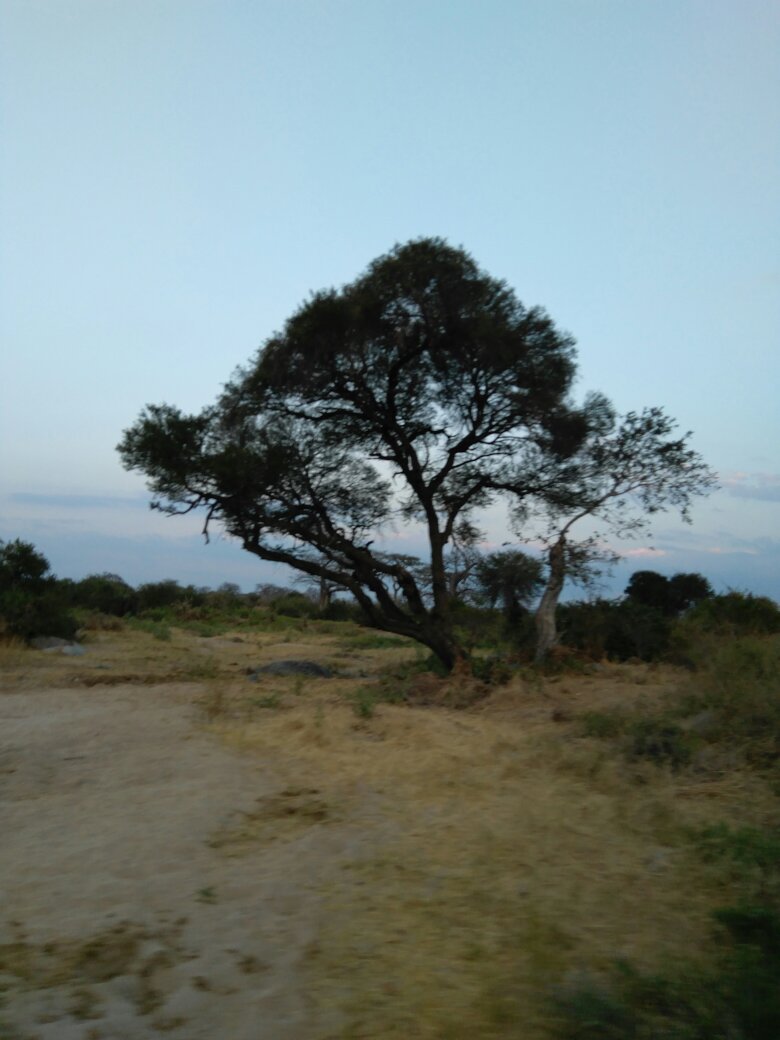
The overlap is not an abstraction, and a good guide can show it to you across a single day’s driving. Starting on the valley floor among the acacia, Commiphora and baobabs, then climbing toward the higher ground and into the miombo, the change in the trees around you is unmistakable, from low thorny bush to a taller broad-leaved canopy.
The animals change with the trees. Ask your guide to point out where one community gives way to the other, and the park stops being a random collection of sightings and becomes a system you can read. From the summit of one of the rocky hills the pattern is visible all at once, the darker band of miombo against the lighter open country, which is one of the better reasons to take a hill hike on a Ruaha safari.
The plants themselves make the boundary visible even without the animals. Watch for the point where the flat-topped acacias and the thick-stemmed Commiphora give way to the taller, straighter Brachystegia trunks of the miombo, and note how the ground cover changes with them. Guides who enjoy botany can turn what looks like undifferentiated bush into a readable sequence, and it makes the drive between habitats interesting in its own right rather than simply transit.
Why the Transition Zone Matters for Conservation
Transition zones are valuable out of proportion to their size, because they hold species from the regions on either side plus the particular communities that arise where those regions meet. So protecting Ruaha guards a wider slice of African biodiversity than a park of comparable size sitting squarely within one region would.
The park’s connection to the wider Rungwa-Kizigo-Muhesi ecosystem, some 45,000 square kilometres of linked protected land, adds to this, allowing wide-ranging species to move as they need to rather than being confined. The 2008 addition of the Usangu wetlands brought another habitat type inside the boundary again. Understanding this makes the case for the park’s protection clearer than any single species could on a Ruaha safari.
There is a further reason transition zones matter, which is their role as species move. As conditions shift, the boundary between vegetation regions does not stay fixed, and areas of overlap are where that adjustment plays out first. Keeping a large, connected, well-protected block of land astride such a boundary gives plants and animals room to shift rather than being squeezed against a hard edge, which is an argument for Ruaha’s scale as much as its location.
Best Time to Experience Both Zones on Safari
The dry season from June to October is the better time to see both zones properly, chiefly because the miombo becomes workable. When that woodland leafs up and the grass grows tall in the rains, it is very hard to see into, so the transition is difficult to explore even though it is at its most beautiful.
In the dry months the woodland thins, the acacia country opens further, and the specialist antelope of both zones are findable. Birders may prefer the green season from November to April, when migrants swell the list in both habitats, accepting harder viewing in exchange. For seeing the overlap in the animals rather than just the plants, the dry season is the choice on a Ruaha safari.
If you have the flexibility, the shoulder weeks either side of the dry season are an interesting compromise. In late May and early June the country still carries green from the rains while the grass has begun to drop, so the vegetation boundary is easy to read and the woodland is starting to open. In November the first migrants arrive while the game is drawing back toward the water. Neither gives peak conditions for anything, but both let you see the park in transition, which suits the subject.
Frequently Asked Questions
What is the East-South African transition zone?
It is the boundary region where the acacia savannah of East Africa, the country of the Maasai steppe, meets the miombo woodland belt of southern and south-central Africa. Ruaha sits on that line, so plants and animals from both regions overlap in the park, which is unusual and accounts for its distinctive species list. Most African parks sit firmly within one region or the other, which is what makes Ruaha’s position on the line worth noting.
Why does Ruaha have species from two regions?
Because of terrain and elevation. The park spans roughly 750 metres in the river valley to about 1,900 metres in the west, with the Great Rift Valley crossing it and an escarpment along the western valley side. The hot dry valley suits East African acacia bush, while the cooler higher ground carries southern miombo, compressing the transition into one park.
Which animals show the overlap best?
The kudu are the textbook case, since Ruaha is the one park where both greater and lesser kudu occur together, their ranges being largely separate elsewhere. Sable and roan from the miombo south share the park with Grant’s gazelle and impala from the eastern savannah, and both striped and spotted hyena are present where most parks have one.
How many plant species are in Ruaha?
Something in the order of 1,650 plant species have been recorded in the park, a figure that reflects its position spanning two vegetation regions rather than any single unusually rich habitat. The range of conditions, from valley bush to miombo, riverine forest, marsh and rocky hills, supports that diversity.
How much does it cost to explore both zones?
Exploring different habitats is part of a normal Ruaha safari rather than a separate charge, though reaching the miombo often means a full-day drive with a packed lunch, which some camps price separately. Park entry is currently around 30 US dollars per non-resident adult per 24 hours before 18 percent VAT. Confirm current fees with TANAPA before you travel.
Plan Your Ruaha Safari
Seeing the overlap properly means getting into both the valley bush and the miombo above it, which takes a guide who can explain what is changing and why. The safari companies and tour operators listed on this website work with guides who read the park as an ecosystem, and they can build a trip that samples both sides of the transition.
Whether the budget is tight or open, the drives, guiding, flights and park bookings are handled in the background so none of the admin lands on you. Want a proper quote, or just a steer on seeing both habitats? Reach out to the operators listed here, and a real person, not a bot, will get back to you.