Sundowner Experience in Ruaha National Park
The sundowner experience in Ruaha National Park is the ritual stop at the end of an afternoon game drive, where your guide sets up drinks and snacks at a scenic spot, often overlooking the river or beneath a baobab, to watch the sun drop over the bush. It is a highlight of the safari day and included by most camps. Ruaha is one of Tanzania’s largest national parks, in the south-central Iringa Region, and the anchor of the country’s quieter southern safari circuit.

What a Sundowner Experience on Safari Involves
The sundowner is a simple idea done beautifully. Toward the end of the afternoon drive, as the light begins to go, your guide pulls up at a chosen spot, sets out a small table from the back of the vehicle, and produces cold drinks and snacks. You get out, stretch your legs, and watch the sun set over the bush with a drink in hand.
Nothing about it is elaborate, and that is the point. After hours in the vehicle, the chance to stand on the ground in the open, in the cooling air, with the day’s sightings behind you, is a particular pleasure. Most camps include the sundowner as part of the afternoon drive without any separate arrangement, so it happens naturally on almost every Ruaha safari.
Where Guides Set Up Sundowners on a Ruaha Safari
The location makes the moment, and guides have their favourites. A high point on the escarpment gives a long view over the country with the sun dropping across miles of bush. A bend on the Great Ruaha River puts water in the foreground, often with hippos grunting and elephants coming down to drink as the light goes. A dry sand riverbed offers a wide open floor with big trees framing the sky.
Beneath a large baobab is the classic Ruaha setting, since the tree’s silhouette against a colouring sky is the image most associated with the park. Guides pick the spot based on where you have ended up, the wind, and whether the area is safe to stand in, so the sundowner is never quite the same twice on a Ruaha safari.
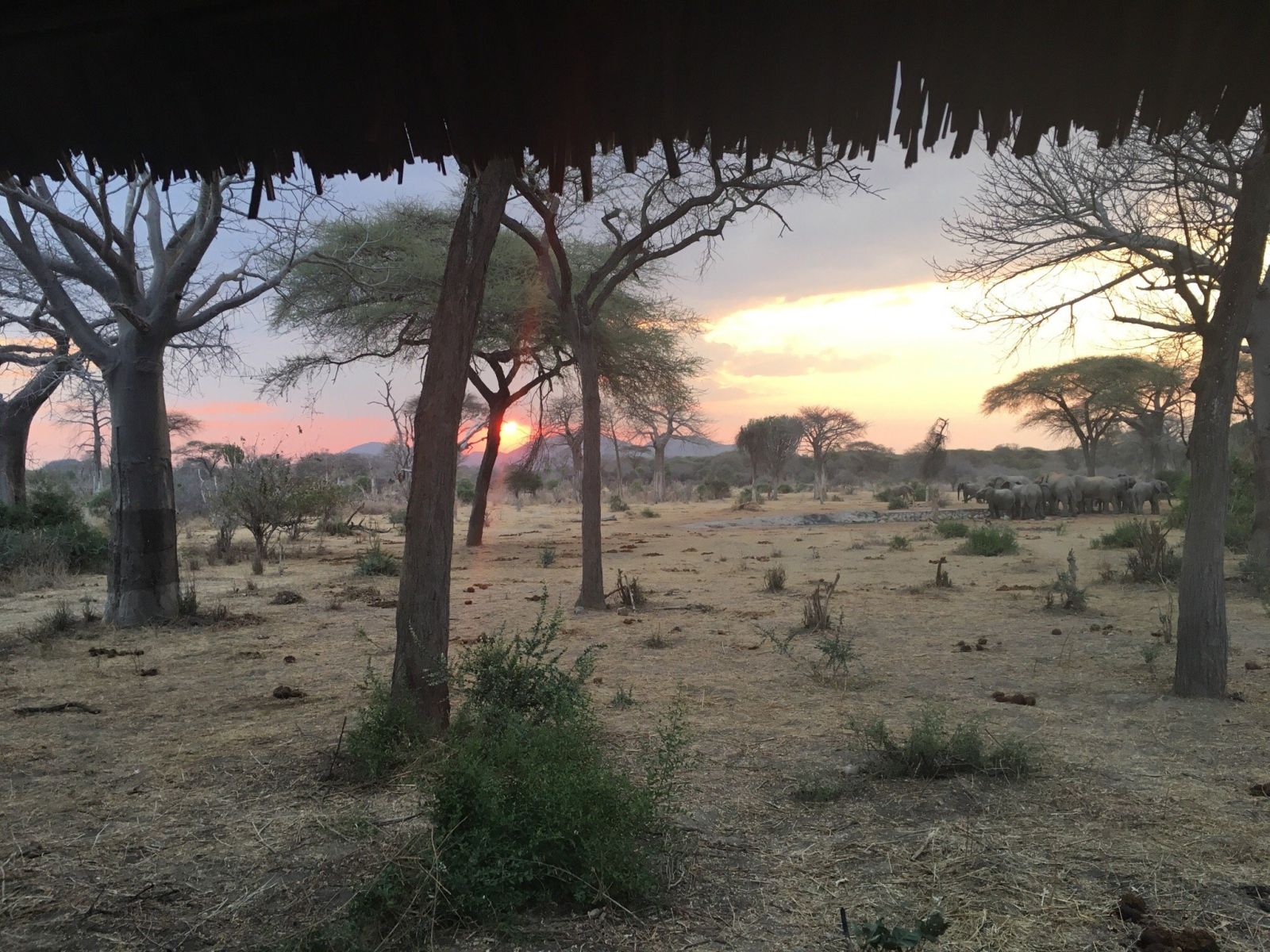
Wind direction matters more than guests usually realise. A spot that catches the evening breeze keeps the insects down and the air pleasant, while a sheltered hollow can fill with mosquitoes as the light goes. Guides also think about the ground itself, avoiding places with thick scrub close by that could conceal an animal, and choosing open ground where everyone can see out in every direction. All of that assessment happens in the few seconds before the vehicle stops, which is why an experienced guide makes the stop feel effortless when it is anything but.
The Sundowner Ritual and Its Origins
The tradition goes back a long way in East and Southern Africa, to the colonial-era habit of a drink at the end of the working day, and it has survived because it suits the rhythm of a safari so well. The afternoon drive naturally ends as the light fails, and stopping to mark that transition, rather than simply driving back to camp, gives the day a proper close.
Gin and tonic is the traditional pour, with a practical origin in quinine and malaria, though camps offer beer, wine, soft drinks and whatever you prefer, along with nuts and biltong or similar. The ritual matters more than the contents. On a Ruaha safari, the sundowner is one of those small customs that turns a series of drives into a proper experience.
It also serves a social purpose that guests notice by the second or third evening. A safari puts strangers in a vehicle together for hours at a stretch, and the sundowner is where the group actually talks, comparing what they saw and asking the guide the questions that did not fit into the drive. Guides often use the stop to explain something about the country you have been crossing, or to tell a story from their own years in the park. For solo travellers and couples alike, that half hour standing around a table in the bush is frequently where the trip’s friendships start.
Standing on the ground in the cooling air, drink in hand, watching a baobab go black against a colouring sky: it is the simplest part of a safari day and often the part people describe first when they get home.
Wildlife and Sounds at Dusk on Safari
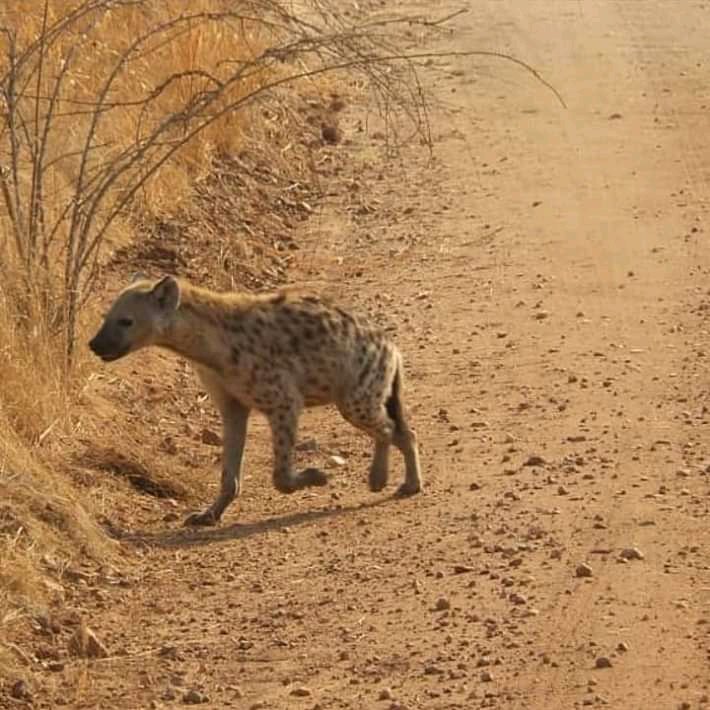
A sundowner is not just scenery, since dusk is when the park changes shift. As you stand there, the day animals settle and the night ones start up, so the soundtrack shifts noticeably over half an hour. Hyenas begin to call, nightjars start their churring, francolins go noisily to roost, and if you are lucky a lion roars somewhere out in the dark, a sound that carries for miles in the still evening air.
Elephants often come to water at exactly this hour, so a river-side sundowner may include a herd drinking in silhouette a few hundred metres off. Bats appear overhead, and the first stars come out in a sky with no light pollution for a hundred kilometres. Guides keep an eye on the surroundings throughout, and this awareness is part of what makes the stop feel relaxed on a Ruaha safari.
Photography at the Sundowner Stop on Safari
The sundowner sits inside the best light of the day, so it is worth having a camera to hand rather than packed away. The classic shots are silhouettes, a baobab, an acacia or the group itself outlined against a sky running from orange to deep red, which need almost no technical skill beyond exposing for the sky.
After the sun goes, the afterglow lasts twenty minutes or so and often produces better colour than the sunset itself, so do not pack up too early. A wide lens serves better than a long one here, since the subject is the sky and the country rather than an animal. Many people find their favourite image of the whole trip comes from a sundowner stop on a Ruaha safari.
Safety and Etiquette on a Sundowner Safari Stop
Getting out of the vehicle in a national park is done on the guide’s terms, and the rules are worth respecting. The guide chooses a spot with clear sightlines and no cover close by, checks it before anyone steps down, and keeps watch throughout. Stay within the area they indicate, do not wander off for a better photograph, and keep noise moderate.
Because the light is going and animals are becoming active, the stop is usually kept to twenty or thirty minutes before heading back. In the park, driving after dark is not permitted unless the camp holds a night drive permit, so the timing accounts for getting back before full dark. Follow the guide’s lead and the sundowner stays exactly as relaxed as it should be on a Ruaha safari.
Sundowners at Camp Versus Out on Safari
Not every sundowner happens in the field. Camps with a good outlook, particularly those on the escarpment or overlooking the river, serve drinks on the deck or around a fire pit at the same hour, and the view can be every bit as good as anything the vehicle reaches. Escarpment camps in particular have an outlook that is hard to beat from ground level.
The two are different in feel rather than quality. A camp sundowner is more comfortable, with proper seating, and flows straight into dinner. A field sundowner puts you out in the bush with the sounds and the space around you. Most guests get both over a stay of several nights, which is the ideal arrangement on a Ruaha safari.
Best Time of Year for a Sundowner Experience in Ruaha
The dry season from June to October is the most reliable, with clear skies almost guaranteeing a clean sunset and dust in the air often deepening the colour. Evenings are cool and comfortable, particularly in June and July when a warm layer is welcome once the sun has gone.
The green season from November to April brings cloud and afternoon storms, which can cancel a sundowner outright but can also produce far more dramatic skies than the dry months ever manage, with light breaking through storm cloud. It is a gamble that sometimes pays handsomely. Either way, sunset falls at a fairly consistent hour year round this close to the equator, so the rhythm of the day stays much the same on a Ruaha safari.
Frequently Asked Questions
What is a sundowner on safari?
It is the stop at the end of an afternoon game drive where your guide sets up cold drinks and snacks at a scenic spot so you can get out and watch the sun set over the bush. It is a long-standing safari tradition and one of the small rituals that gives the day a proper close.
Is the sundowner included in the safari price?
At most camps, yes. The sundowner is part of the normal afternoon drive and included in your rate, with drinks and snacks provided, though premium spirits and wines may be charged separately at some camps. Budget operations may handle it differently, so confirm what is included when you book.
Where are the best sundowner spots in Ruaha?
Guides have their favourites: a high point on the escarpment for the long view, a bend on the Great Ruaha with hippos and elephants coming to drink, a wide sand riverbed, or beneath a large baobab, which gives the silhouette most associated with the park. The choice depends on where the drive has taken you and where is safe to stand.
Is it safe to get out of the vehicle for a sundowner?
Yes, when the guide manages it. They choose a spot with clear sightlines and no close cover, check it before anyone steps down, and keep watch throughout. Stay within the area indicated, do not wander off, and keep noise moderate. The stop is usually kept to twenty or thirty minutes as the light goes.
Can you stay out after dark for a sundowner?
Only if your camp holds a night drive permit, since driving in the park after dark otherwise is not permitted. Sundowner timing is set so you get back before full dark. Camps licensed for night drives can extend the outing with a spotlight, which usually carries a separate fee of around 50 US dollars per person.
Plan Your Ruaha Safari
A good sundowner comes down to a guide who knows the right spot for the evening and a camp that makes a proper occasion of it, which is worth having arranged well. The safari companies and tour operators listed on this website run afternoon drives across Ruaha that finish with a sundowner at the best vantage points the park offers.
Whether the budget is tight or open, the drives, guiding, flights and park bookings are handled in the background so none of the admin lands on you. Want a proper quote, or just a steer on camps with the best sunset outlooks? Reach out to the operators listed here, and a real person, not a bot, will get back to you.