What Are the Top Reasons to Visit Ruaha?
The top reasons to visit Ruaha are its outstanding predators, including one of Africa’s great lion populations and endangered wild dogs, its crowd-free wilderness larger than the Serengeti, an unusual mix of East and Southern African wildlife, dramatic baobab country, and the chance to walk the bush on foot. Ruaha is one of Tanzania’s largest national parks, in the south-central Iringa Region, and the anchor of the country’s quieter southern safari circuit.
See One of Africa’s Great Lion Populations on Safari
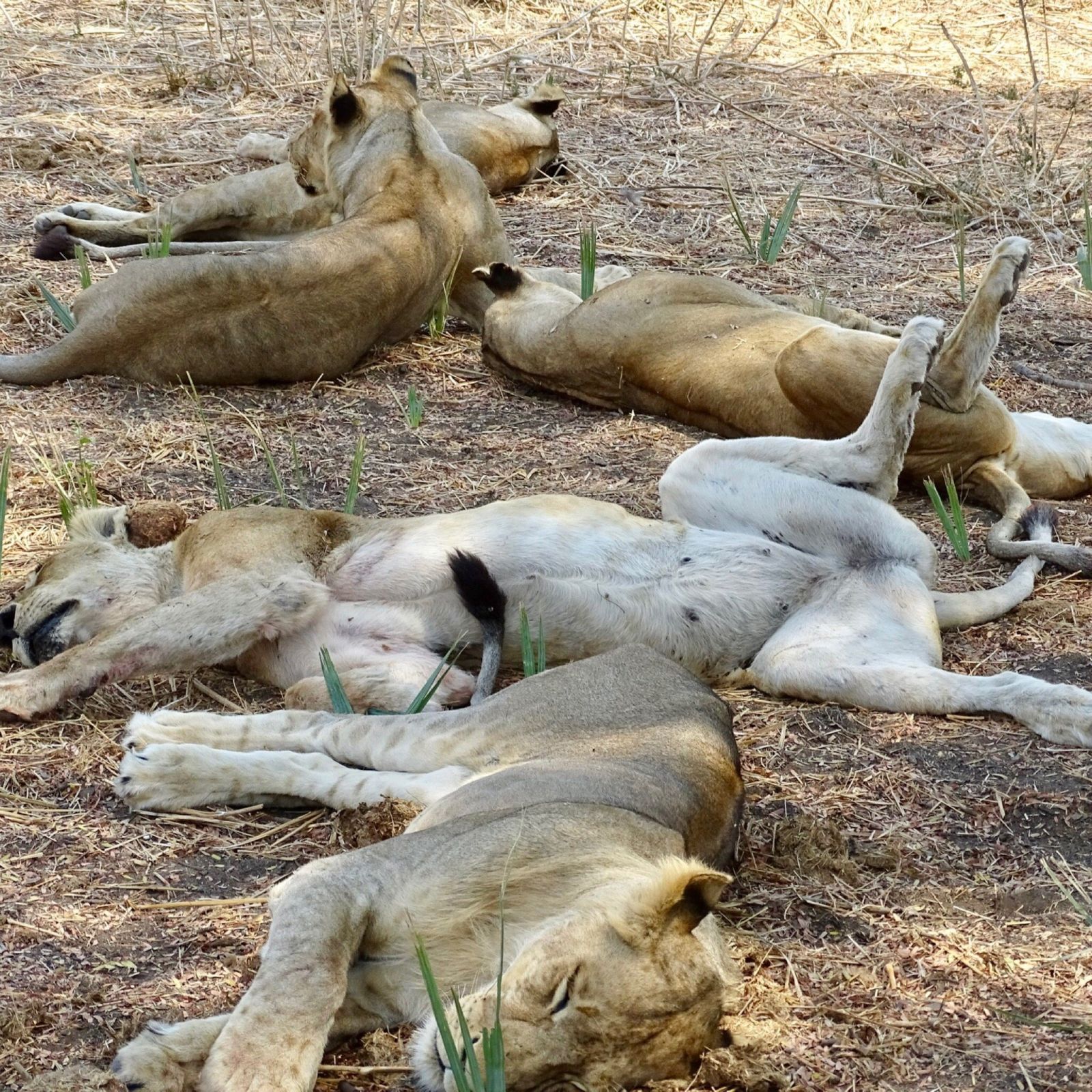
Lions are the headline reason to book a Ruaha safari. The greater Ruaha area is often cited as holding close to a tenth of the world’s remaining lions, and while any single figure like that deserves caution, the reality on the ground earns the reputation. Prides here run large, with groups of more than twenty seen fairly regularly, and they are bold enough to hunt buffalo and even young giraffe. The lions are also relaxed around vehicles, so sightings tend to be calm and close. For anyone who wants big cats in serious numbers, Ruaha is one of the best places in Africa to find them.
What makes the lion viewing here special is not just the numbers but the quality of the sightings. Because the prides are large and settled, you often come upon a whole family group together, cubs and all, rather than a lone animal, and because they are used to vehicles, you can sit with them at length as the pride interacts, dozes and rouses. In the dry season, when the prides gather along the river where the prey concentrates, a single good sighting can last an hour or more. Few parks let you watch lions in such numbers, so close and so undisturbed, which is why they top the list of reasons to come.
Track Endangered Wild Dogs in Ruaha
Ruaha is a genuine stronghold for the endangered African wild dog, with around a hundred ranging across the park, one of the larger populations left anywhere. A wild dog tracking safari here offers something few parks can, the chance to find an animal that has vanished from most of its old range. Sightings are never guaranteed, since the dogs cover huge distances, but the denning season around June and July pins a pack to one spot and gives the best odds of the year. For seasoned safari-goers, the prospect of wild dogs is reason enough to make the trip south.
Escape the Crowds in a Vast Wilderness
One of Ruaha’s greatest draws is what it lacks: crowds. The park is larger than the Serengeti yet sees a tiny fraction of the visitors, with only a handful of camps spread across a huge area. On a drive you can go an hour without meeting another vehicle, and a sighting is usually yours alone rather than shared with a ring of vans. For travellers who picture a safari as a wild, private thing, this solitude is a decisive reason to choose Ruaha over the busier northern parks. A Ruaha safari delivers space and quiet that are increasingly rare.
That solitude changes the whole feel of the safari. Without the pressure of other vehicles, your guide can take the time to work a sighting properly, wait for a resting pride to stir, or simply sit quietly while the bush comes alive around you. Sundowners feel genuinely remote, night skies are dark and full of stars, and the silence out on a drive is broken only by the wildlife rather than by engines and radios. For many people it is this sense of being deep in wild country, rather than any single sighting, that turns a Ruaha trip into the one they remember most.
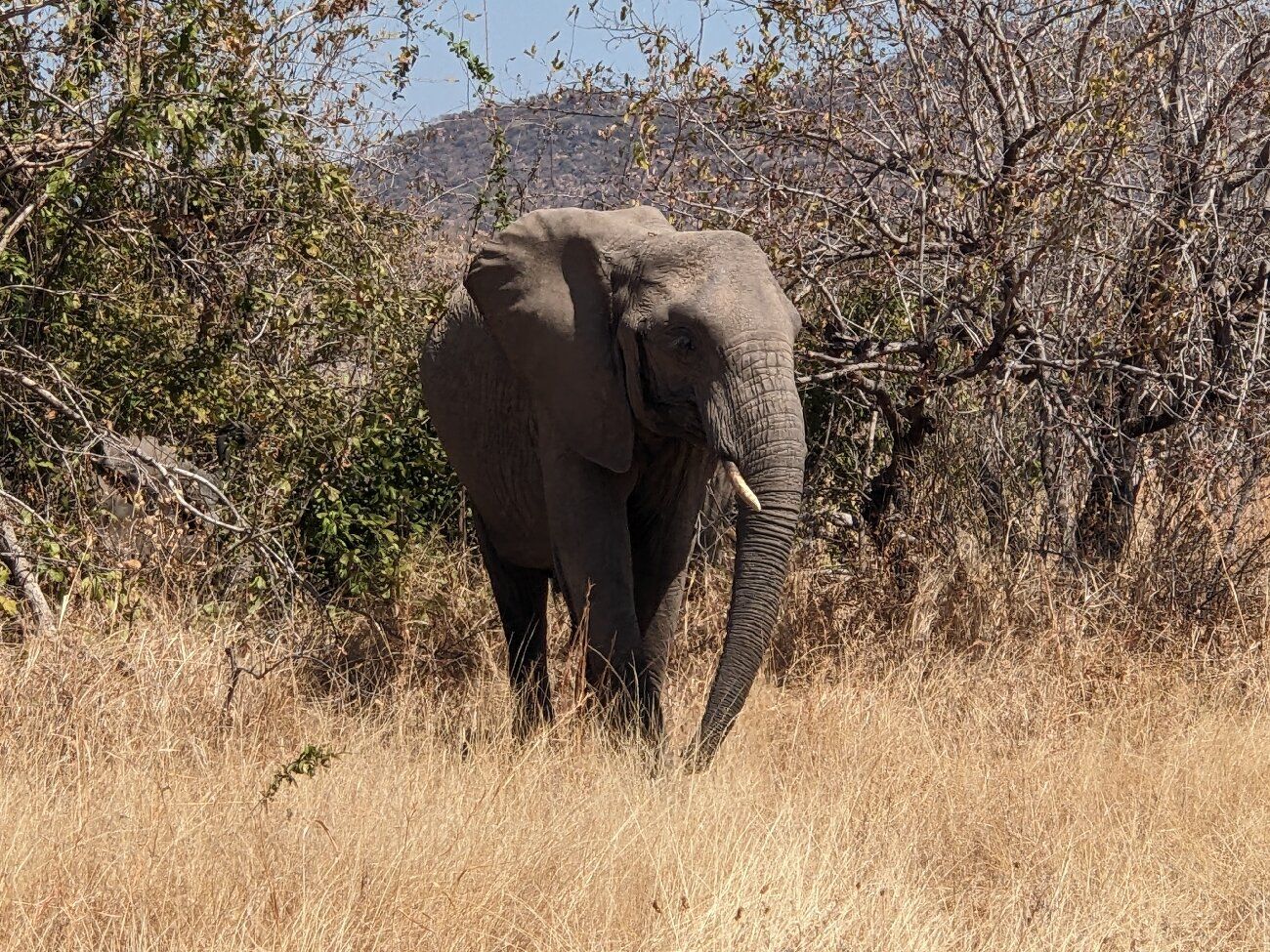
Bigger than the Serengeti, with a fraction of the vehicles, Ruaha offers the rarest thing in modern safari travel: the feeling of having a great wilderness almost to yourself.
Ruaha’s Unusual East-Meets-South Wildlife
Ruaha sits where the wildlife of East Africa meets that of Southern Africa, and that overlap gives it a species list found nowhere else in the country. Greater and lesser kudu occur together, which is rare. Sable and roan antelope share ground with Grant’s gazelle and impala, and both striped and spotted hyena are present. For anyone who has done a few safaris and thinks they know the standard cast, this mix is a real reason to come, since a Ruaha safari puts species side by side that seldom meet anywhere else.
Watch Elephants Along the Great Ruaha River
Ruaha carries one of Tanzania’s largest elephant populations, and watching the herds along the Great Ruaha River is one of the quiet joys of a visit. In the dry season the elephants gather at the riverbed and dig into the sand for water, a behaviour you can watch at length from close range. Seeing a family group work a dry channel in the golden light, or move across the plains beneath the baobabs, is the kind of sighting that stays with people. For reliable, close elephant viewing, a dry-season Ruaha safari is hard to beat.
Walk the Bush on a Guided Walking Safari
Ruaha lets you get out of the vehicle in a way the busier parks often cannot. A walking safari with an armed ranger changes the scale of the place entirely, dropping you from big set-piece sightings to the small signs of the bush, the tracks, the calls, the details you miss from a vehicle. Several camps build real programmes around walking, and the dry season is the ideal time for it. For travellers who want a more active, hands-on safari, the chance to walk is a strong reason to choose Ruaha.
Baobab Country and Dramatic Scenery
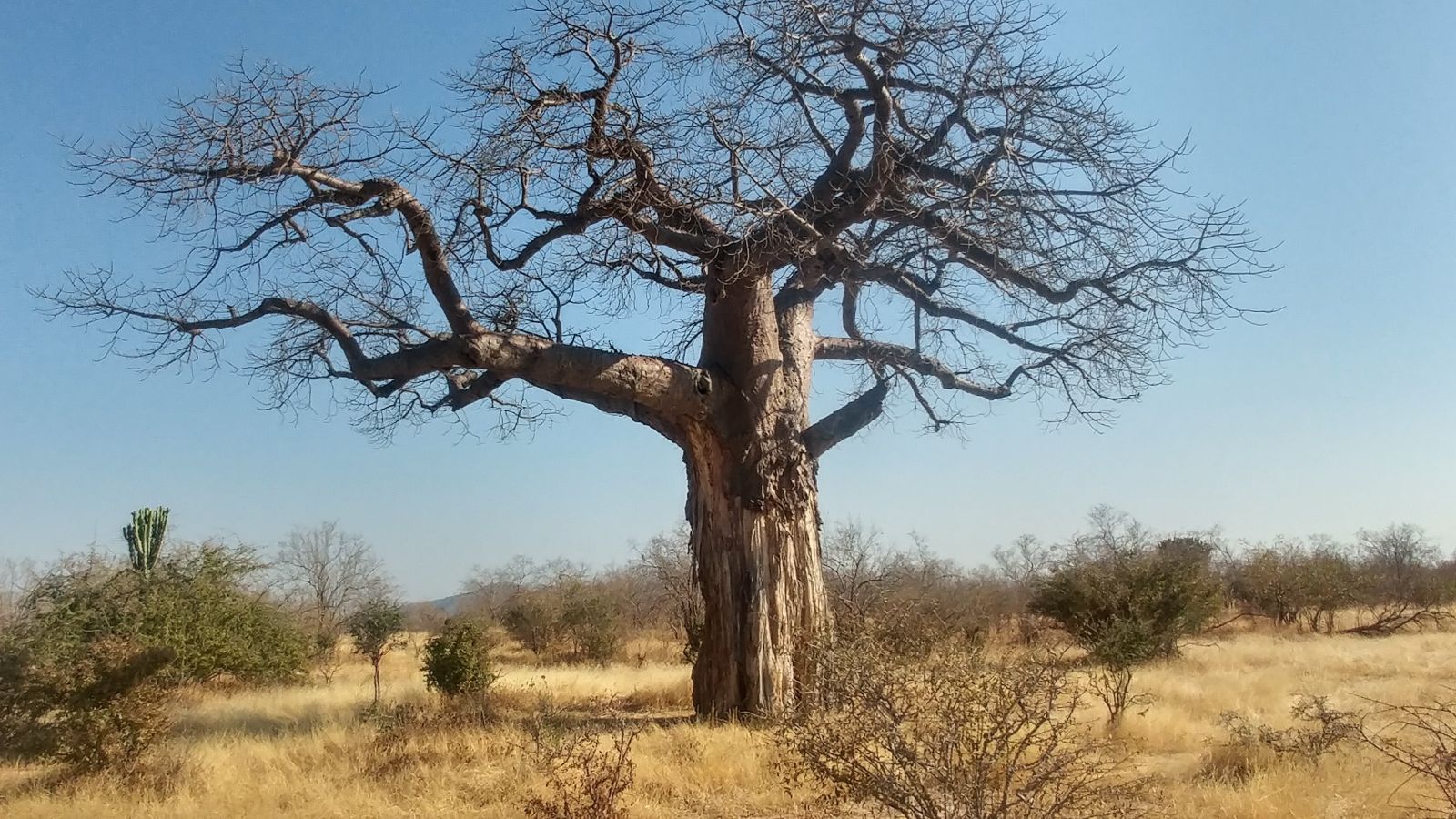
Ruaha is beautiful in a way that sets it apart from the open plains of the north. Ancient baobabs stand across the country, some centuries old, and the mix of river, sand tributaries, rolling hills, rocky outcrops and open savannah gives the park a varied, rugged character. The scenery photographs unlike anywhere else, and a lone baobab against a big sky at dawn is one of the images people carry home. For photographers and lovers of dramatic country, the scenery alone is a reason to book a Ruaha safari.
Birdwatching in a Transitional Zone
With well over 500 species, and many sources citing more than 570, Ruaha is a serious birding park. The same transitional location that gives it unusual mammals brings together birds from the eastern and southern zones, and it holds central Tanzanian endemics like the Tanzanian red-billed hornbill, ashy starling and yellow-collared lovebird. A birdwatching safari here rewards both the casual looker and the serious lister, especially in the green season when migrants arrive. For birders building a Tanzania list, Ruaha offers species the northern parks simply do not hold.
Pair Ruaha With Zanzibar or the Southern Circuit
Ruaha combines beautifully with the rest of a Tanzania trip, which is a practical reason to include it. Flights link the park with Zanzibar, so you can finish a safari with a few days on the beach, wild first and restful second. It also pairs with the other southern parks like Nyerere and Mikumi for a fuller circuit, hopping between them by air. This flexibility means a Ruaha safari slots into a wider holiday without long backtracking, letting you build a trip that mixes bush, beach and more than one park.
Best Time to Visit Ruaha for These Reasons
The dry season from June to October delivers most of what draws people here, with concentrated wildlife, strong predator sightings, elephants at the river and ideal walking conditions, and October in particular for peak density. The wild dog denning season of June and July is best for that prized sighting. The green season from November to April swaps concentrated game for the best birding, green scenery and lower rates. Whatever your main reason for coming, Ruaha rewards a visit across most of the year, so match your dates to your priorities and the park delivers.
Frequently Asked Questions
Why should I visit Ruaha instead of the northern parks?
For solitude and predators above all. Ruaha is larger than the Serengeti but far quieter, with outstanding lions, endangered wild dogs, an unusual wildlife mix and dramatic baobab country. If you want a wild, private safari over big crowds and the migration spectacle, Ruaha is the stronger choice. First-timers set on the migration usually start with the north instead.
What is Ruaha best known for?
Its predators, especially its lions, and its sense of empty wilderness. The greater Ruaha area is often cited as holding around a tenth of the world’s remaining lions, in some of the largest prides recorded, and the park is a stronghold for endangered wild dogs and one of the few homes of cheetah in East Africa.
Is Ruaha worth the effort to reach?
For the right traveller, yes. It takes a flight or a long drive to get here, but that remoteness is exactly what keeps the park quiet and wild. Visitors who value space, strong predators, unusual wildlife and dramatic scenery over easy access and big crowds tend to find Ruaha well worth the trip.
Can you combine Ruaha with a beach holiday?
Yes, and many people do. Flights link Ruaha with Zanzibar, so a common trip runs a few nights on safari and then a flight to the island for the beach. Ruaha also pairs with the other southern parks for a fuller circuit. This flexibility is one of the practical reasons to include the park in a wider Tanzania trip.
How much does a Ruaha safari cost?
It varies with how you travel and where you stay. Park entry for a non-resident adult is currently around 30 US dollars per person for each 24 hours before 18 percent VAT, with reduced rates for residents and East African citizens. Flights from Dar es Salaam have commonly run around 380 dollars per person each way, and accommodation ranges widely by tier. Confirm current fees with TANAPA before you travel.
Plan Your Ruaha Safari
Whatever draws you to Ruaha, whether the lions, the wild dogs, the solitude or the scenery, a good operator can build a trip around it and match your dates to your priorities. The safari companies and tour operators listed on this website run trips across Ruaha through every season, with guides who know how to deliver the sightings and experiences the park is famous for.
Whether the budget is tight or open, the days get shaped around what you most want to see, and the flights, park bookings and camp choices are handled in the background so none of the admin lands on you. Want a proper quote, or just a steer on where to start? Reach out to the operators listed here, and a real person, not a bot, will get back to you.