Which Animals Are Most Common in Ruaha?
The most common animals in Ruaha are elephants, impala, giraffe, zebra and buffalo, all seen reliably on most game drives, along with lions among the predators and greater kudu among the antelope. Hippo and crocodile are fixtures on the Great Ruaha River. Ruaha is one of Tanzania’s largest national parks, in the south-central Iringa Region, and one of East Africa’s finest predator destinations for a safari.
Elephants: The Most Reliable Big Sighting on a Ruaha Safari
If one large animal defines a Ruaha safari, it is the elephant. The park carries one of Tanzania’s largest elephant populations, with numbers commonly quoted around ten thousand across the greater ecosystem, so herds turn up on most drives, especially in the dry season. As surface water dries out, families gather at the riverbed and dig into the sand for water, which makes them both easy to find and absorbing to watch. Of all the big sightings, elephants are the one you can most reasonably expect to see.
Lions: Commonly Seen Predators in Ruaha
Among the predators, lions are the ones you are most likely to see. Ruaha’s prides are large and well used to vehicles, so sightings tend to be relaxed and close, and the greater Ruaha area is often cited as holding close to a tenth of the world’s remaining lions. In the dry season, when prey concentrates on the river, the prides set up nearby and become easier still to find. No predator sighting is ever guaranteed, but lions are the safest bet Ruaha offers among the big cats.
Impala, Zebra and Giraffe: Everyday Plains Game in Ruaha
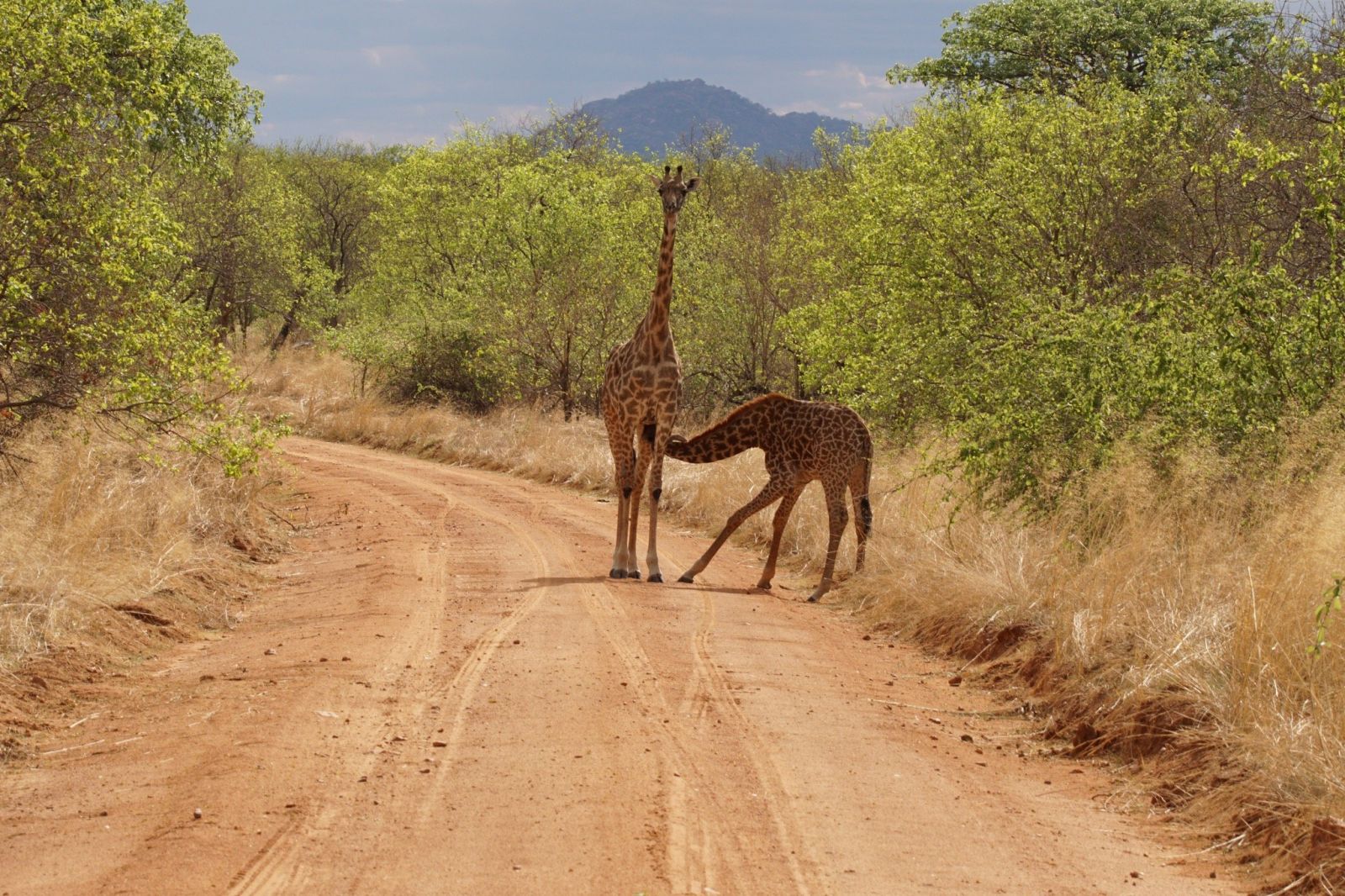
The animals you will see most of all are the plains game. Impala are everywhere, in herds that barely lift their heads as the vehicle passes. Zebra graze the open ground in good numbers, and giraffe browse the acacia across much of the park. These are the everyday backdrop to a Ruaha safari, the animals that fill the gaps between the big sightings and give a drive its steady rhythm. Common they may be, but a tower of giraffe against the baobabs never quite loses its pull.
There is a reason to pay attention to the common grazers beyond their own appeal. Impala, zebra and giraffe are what the predators hunt, so a herd on edge, heads up and staring in one direction, often means a cat is close. Guides read the plains game as a living early-warning system, and some of the best predator sightings start with noticing that the impala have stopped grazing. Zebra also tend to gather near water in the dry season, so a large group can point you toward the pools where other animals are drinking. Learning to watch the common animals, rather than driving past them, is one of the quiet skills of a good safari.
Seen on almost every drive. Elephant, impala, zebra, giraffe and warthog. The reliable backbone of a Ruaha safari.
Commonly seen. Lion, buffalo, greater kudu, hippo and crocodile. Regular sightings in the right areas and seasons.
Possible but less reliable. Leopard, cheetah, sable and roan antelope. Real prospects that reward patience and a good guide.
The lucky sighting. African wild dog. Present in good numbers but wide-ranging, so always a bonus.
Buffalo Herds in Ruaha’s River Country
Buffalo are another reliable sight, moving through the river country in herds that can number well into the hundreds. They complete the park’s four of the Big Five, alongside lion, elephant and leopard, and their presence draws the lions that hunt them, so a big buffalo herd is often worth watching for the drama it can trigger. In the dry season they stay close to water, which makes them easy to find on drives near the river.
Old bulls are worth a second look. Solitary males, often caked in mud and split off from the herd, rest up near the water and can be approached more closely than the nervous main groups. Guides call them the ones to watch, since a lone buffalo is unpredictable and commands respect even from lions. A herd on the move at a river crossing, dust rising and calves in the middle, is one of the more stirring common sightings a Ruaha drive turns up.
Greater Kudu: Ruaha’s Signature Antelope
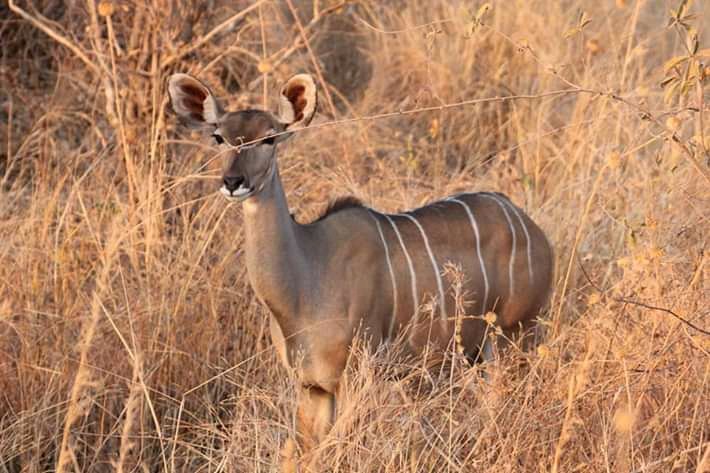
Of the many antelope here, the greater kudu is the one Ruaha is known for. The bulls, with their long spiralled horns, are a signature sight that photographers come specifically to find, and they are seen regularly in the wooded and hilly parts of the park. Ruaha is also one of the few places where greater and lesser kudu occur together, so a patient Ruaha safari can turn up both. The kudu is common enough to expect and handsome enough that it never feels ordinary.
The everyday animals carry a Ruaha drive as much as the predators do. Impala, zebra and giraffe fill the quiet hours, and a greater kudu bull in the woodland is a sight worth stopping for every time.
Hippo and Crocodile Along the Great Ruaha River
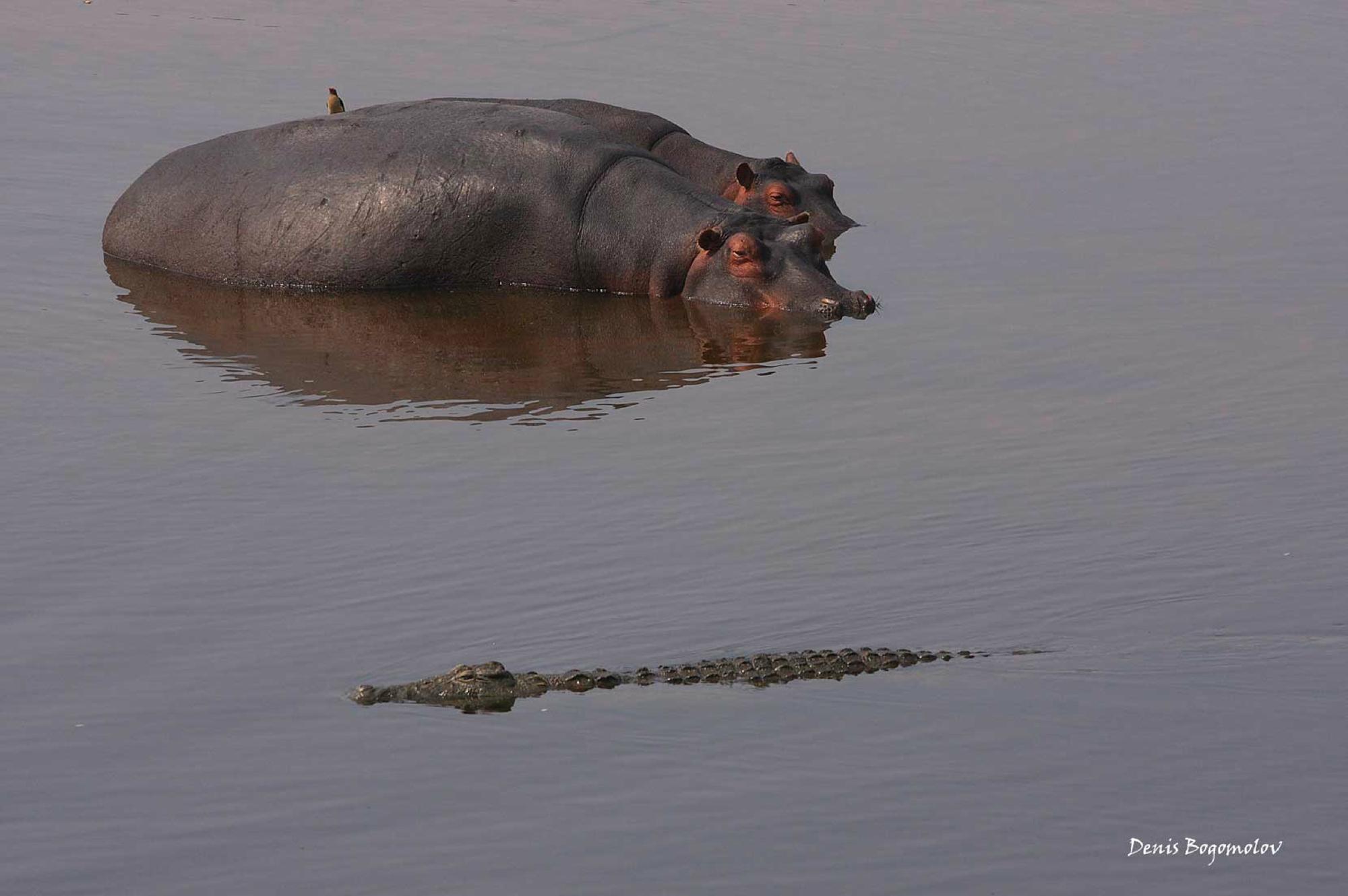
Down on the river, hippo and crocodile are permanent residents. Hippo crowd the deeper pools, grunting and jostling in ever tighter water as the dry season shrinks the river, and crocodiles line the banks waiting for the game that comes to drink. A stop at a hippo pool is a near-certain sighting on any river drive, and it often turns into a long watch as other animals arrive at the water. For reliable big-animal viewing, the river is the place to linger.
Baboons, Warthogs and Other Common Sightings in Ruaha
Plenty of smaller and mid-sized animals round out the common list. Yellow baboons move in noisy troops, warthogs trot across the tracks with their tails up, and vervet monkeys work the riverine trees. Banded mongoose, dik-dik and bushbuck show up for those paying attention, and jackals patrol the open ground. None of these are the reason people come, but together they keep a drive busy and give the park its everyday texture between the headline sightings.
These smaller animals also reward slowing down. A troop of baboons crossing the track often signals a leopard nearby, since the baboons will bark an alarm the moment they spot one, so a good guide reads their behaviour as a clue rather than a distraction. Dwarf mongoose colonies pop up on old termite mounds, bee-eaters hawk insects from low branches, and ground hornbills stalk the grass in small parties. On a slow game-viewing hour, tuning in to this smaller cast is what keeps a drive interesting, and it is often where the guide’s knowledge shows most clearly.
Which Animals Are Harder to See on a Ruaha Safari
It helps to know what not to bank on. Leopard sightings are reliable by safari standards but still take some luck, and cheetah, while present, are seen less often. Sable and roan antelope favour the hilly, wooded ground and are far from guaranteed. The endangered African wild dog is present in good numbers, around a hundred in the park, but ranges so widely that a sighting is always a bonus rather than an expectation. And there are no rhino in Ruaha at all, so the full Big Five is off the table here. Setting these expectations straight makes the common sightings all the more satisfying.
Best Time to See Ruaha’s Common Animals
The dry season from June to October is when the common animals are easiest to see, since thin bush and shrinking water pull elephant, buffalo, impala, zebra and giraffe toward the river where they are simple to find. The green season from November to April scatters the game as water spreads across the park, so sightings take a little more work, though the birding and scenery reward the visit. For the most reliable viewing of Ruaha’s everyday wildlife, plan a dry-season trip.
Frequently Asked Questions
What animals will I definitely see in Ruaha?
No sighting is ever fully guaranteed in a wild park, but elephant, impala, zebra, giraffe and warthog are seen on almost every drive, especially in the dry season. Lions and buffalo are commonly seen too. Treat these as the reliable core of a Ruaha safari, with cats like leopard and rarer animals like wild dog as the bonuses on top.
Is Ruaha good for seeing elephants?
Very good. The park holds one of Tanzania’s largest elephant populations, and in the dry season the herds gather at the riverbed and dig for water in the sand. Elephants are among the most reliable big sightings here, so if seeing them matters to you, Ruaha rarely disappoints.
Which predators are most common in Ruaha?
Lions are by far the most commonly seen predator, in large prides that are relaxed around vehicles. Leopard sightings are reliable but take more luck, cheetah are less frequent, and wild dogs, though present in good numbers, range widely and are always a lucky find. For a first predator sighting, lions are the safest bet.
Can you see the Big Five in Ruaha?
You can see four of them. Lion, elephant, leopard and buffalo are all present, with lion, elephant and buffalo commonly seen and leopard reliable but harder. There are no rhino in Ruaha, so the full Big Five is not possible. The park makes up for it with excellent cheetah and wild dog viewing.
How much does it cost to see the wildlife in Ruaha?
Costs depend on how you travel and where you stay. Park entry for a non-resident adult is currently around 30 US dollars per person for each 24 hours before 18 percent VAT, with reduced rates for residents and East African citizens. On top come flights, commonly around 380 dollars per person each way from Dar es Salaam, and accommodation across a wide range. Confirm current park fees with TANAPA before you travel, as they are reviewed each fiscal year.
Plan Your Ruaha Safari
Knowing which animals are reliable and which are a lucky find helps set the right expectations, and a good guide turns those odds in your favour. The safari companies and tour operators listed on this website run drives in Ruaha through every season, with guides who know where the elephant herds gather and how to read the river for its best sightings. Ask them straight and they will tell you what your dates are likely to deliver.
Whether the budget is tight or open, the drives get shaped around what you most want to see, and the flights, park bookings and camp choices are handled in the background so none of the admin lands on you. Want a proper quote, or just a steer on timing your sightings? Reach out to the operators listed here, and a real person, not a bot, will get back to you.