How Large Is Ruaha National Park?
Ruaha National Park covers around 20,226 square kilometres, making it one of Tanzania’s largest national parks and larger than the Serengeti, though smaller than Nyerere National Park. It grew to this size in 2008 when the Usangu wetlands were added, and it forms the core of a wider protected ecosystem of roughly 45,000 square kilometres. Ruaha sits in the south-central Iringa Region and anchors the country’s quieter southern safari circuit.

The Size of Ruaha National Park for a Safari
Ruaha spreads across roughly 20,226 square kilometres, or about 7,809 square miles, which is a genuinely vast area for a single park. To put a Ruaha safari in perspective, that is larger than some small countries, and larger than the famous Serengeti to the north. Yet only a handful of camps operate across all that ground, which is the detail that shapes the whole experience. Space, more than anything, is what a visitor feels here.
The park reached its current size in 2008, when the Usangu Game Reserve and surrounding wetlands were folded in, expanding it considerably. Before that it was smaller, and the addition brought new habitat, including the seasonal marshes in the west, into the protected area. That growth is part of why the park’s wildlife list is so long, since more habitat means more species.
Numbers on a page are hard to picture, so a comparison helps. At roughly 20,226 square kilometres, Ruaha is close in size to a small country like Slovenia or the American state of New Jersey, all of it wild bush with a scattering of camps. You could drop several of the popular northern parks inside it and still have room to spare. That is the scale a visitor is moving through, and it is why a single trip only ever samples a corner of the whole.
Is Ruaha the Largest National Park in Tanzania?
For years Ruaha was described as Tanzania’s largest national park, and plenty of older guides still say so. That changed in 2019, when Nyerere National Park was created from the northern part of the former Selous Game Reserve. Nyerere covers around 30,893 square kilometres, which makes it the largest national park in the country and pushes Ruaha into second place. So the accurate statement today is that Ruaha is one of Tanzania’s largest national parks, the second-largest after Nyerere, and still one of the biggest protected areas in East Africa.
None of this changes what a Ruaha safari feels like on the ground. Whether it ranks first or second by area, the park is enormous, wild and thinly visited, and the practical experience of driving through a park bigger than the Serengeti with almost no other vehicles around is exactly the same. The ranking is a fact worth getting right, but the wildness is the point.
Ruaha is larger than the Serengeti, yet a handful of camps share it. That ratio of space to visitors, not the exact ranking, is what a first-time safari-goer actually notices.
How Ruaha Compares in Size to Other Tanzanian Parks
Set against its neighbours, Ruaha’s scale stands out. It is larger than the Serengeti, which covers roughly 14,750 square kilometres, and far larger than the popular northern parks like Tarangire, Lake Manyara and Arusha. Only Nyerere, at around 30,893 square kilometres, is bigger among Tanzania’s national parks. Among the southern circuit parks that a Ruaha safari often links with, Ruaha dwarfs Mikumi and Udzungwa, which is why it tends to be the centrepiece of a southern trip rather than a side stop.
The Wider Ruaha Ecosystem Beyond the Park
The park’s official area understates the true scale of the wilderness. Ruaha forms the core of the Rungwa-Kizigo-Muhesi ecosystem, a connected block of around 45,000 square kilometres that includes the Rungwa Game Reserve, the Kizigo and Muhesi reserves, and the Mbomipa Wildlife Management Area. Wildlife moves freely across this whole area, so animals you see inside Ruaha are part of a system far larger than the park boundary. Some sources put the wider conjoined wildlife area at 50,000 square kilometres or more. This connected scale is what keeps populations of wide-ranging species like elephant and wild dog healthy, since they have the room they need.
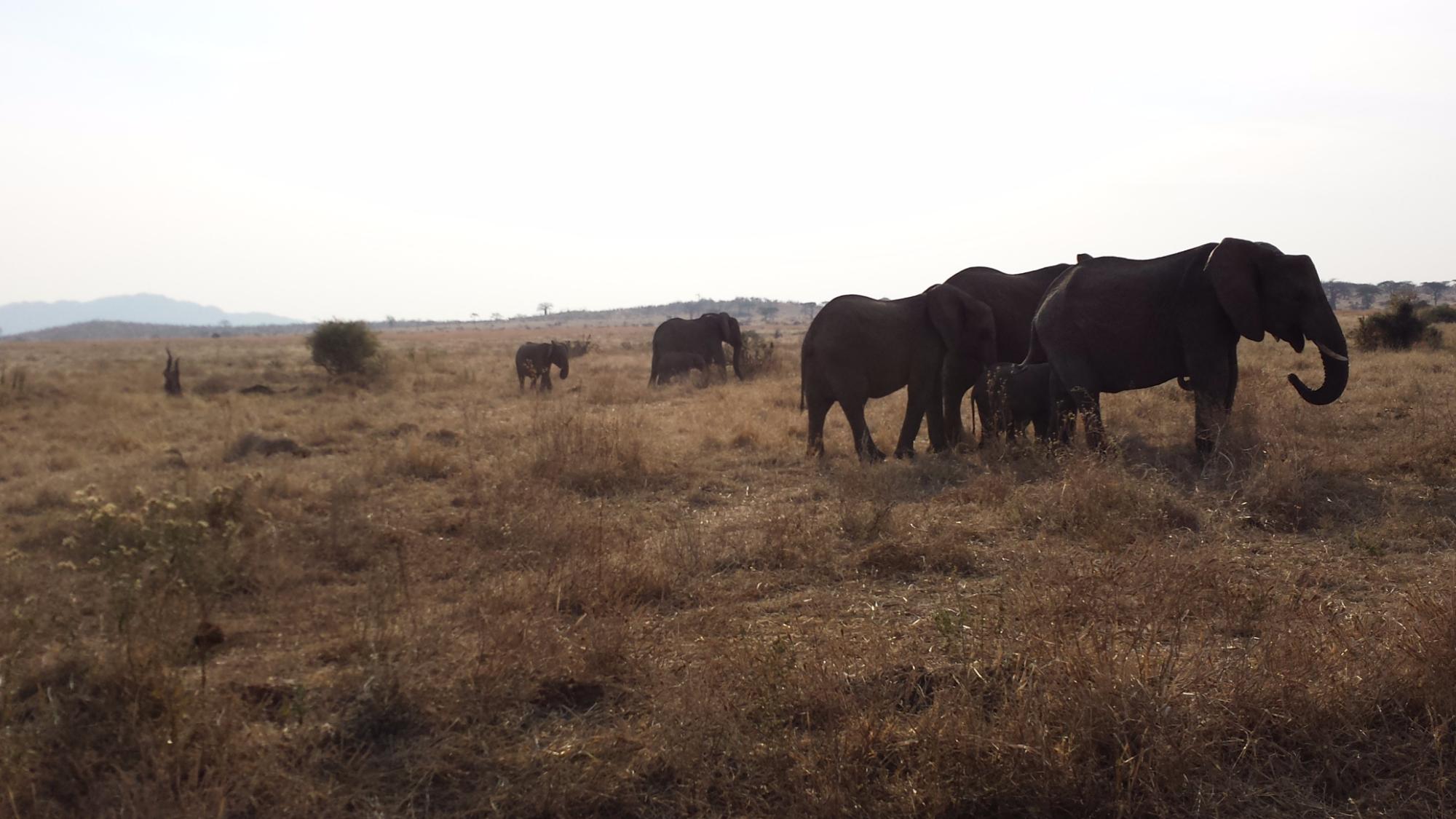
The conservation value of that connectedness is hard to overstate. Fenced-in parks, whatever their size, struggle to hold wide-ranging animals over the long term, because those species need to move with the seasons and the water. Ruaha sitting at the heart of a much larger protected block means its elephants and predators are not marooned on an island of habitat, but part of a living, moving system. For a visitor, it means the wildness you sense on a drive is real rather than staged, and the animals are behaving as they would across a genuinely open expanse.
What the Park’s Size Means for Your Ruaha Safari
All that space has real consequences for a visit. Because the park is so large and the camps so few, you rarely share a sighting, and a drive can run for an hour without meeting another vehicle. It also means the wildlife is spread out, so a good guide and a well-chosen camp matter, since you want to be based where the game concentrates rather than driving vast distances to reach it. The size is why most people focus their time on one or two sectors rather than trying to cover the whole park, and why staying inside the boundary, close to the action, pays off. A Ruaha safari is about depth in a chosen area, not racing across the full expanse.
The scale also explains the park’s greatest asset, which is its emptiness. In a park this large with so few beds, the arithmetic simply does not allow crowds, so even at peak season you are spread thin across a huge area. That is a deliberate contrast with the northern parks, where more visitors pack into smaller, more famous reserves. For travellers who measure a safari partly by solitude, Ruaha’s size is not just a statistic but the very thing that delivers the quiet, private feel they came for.
Getting Around a Park This Large on Safari
Given the distances, how you move around matters. Within a sector, game drives cover the ground at an easy pace, working the river and its tributaries where wildlife gathers. Between distant parts of the park, such as the central river area and the remote Jongomero south, the practical link is a short flight rather than a long drive, which is why camps in different sectors are often reached by their own airstrips. For most visitors, this means picking a base and exploring around it, rather than trying to traverse the whole park, which would eat your time in transit. The scale is best enjoyed by settling into one part of it.
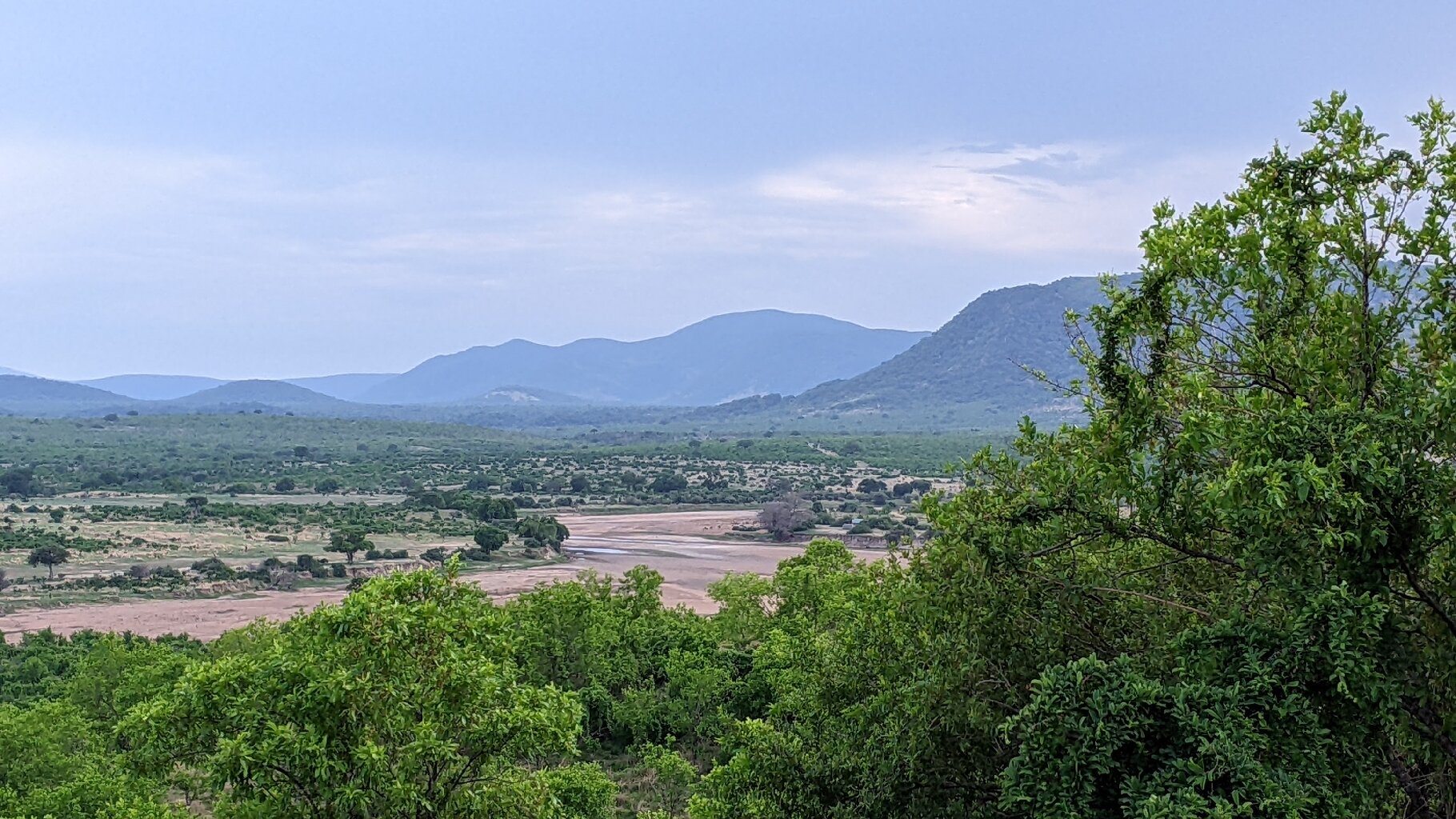
Travellers with more time sometimes do combine two sectors, flying between the central river area and the southern Jongomero country to sample the park’s different characters. It is a rewarding way to see the range of a park this large, though it adds cost and a little flying, so it suits longer trips. The alternative, and the one most people choose, is to go deep in a single area, learning its patterns over a few days rather than skimming the surface of many. Both approaches work; the park is simply too big to see all of on one visit.
Best Time to Explore Ruaha’s Vast Area on Safari
The dry season from June to October is when the park’s size works most in your favour, because shrinking water concentrates the widely spread wildlife along the river, so you do not have to cover the whole vast area to find game. In the green season from November to April, the animals disperse across the park as water spreads out, so sightings take more searching, though the scenery and birding reward the effort. Whenever you visit, the sheer scale of Ruaha is a constant, and it is the reason the park feels as wild and private as it does.
Frequently Asked Questions
How many square kilometres is Ruaha National Park?
Ruaha covers around 20,226 square kilometres, or roughly 7,809 square miles. It reached this size in 2008 when the Usangu wetlands were added. This makes it one of Tanzania’s largest national parks and one of the biggest protected areas in East Africa.
Is Ruaha bigger than the Serengeti?
Yes. Ruaha covers around 20,226 square kilometres against the Serengeti’s roughly 14,750, so it is the larger of the two by area. Despite this, Ruaha sees a small fraction of the Serengeti’s visitors, which is a big part of its appeal for travellers wanting a quieter safari.
Is Ruaha the largest national park in Tanzania?
Not anymore. Ruaha was the largest until 2019, when Nyerere National Park was created from the northern Selous. Nyerere covers around 30,893 square kilometres, making it the largest, with Ruaha now second. Ruaha remains one of the largest national parks in Tanzania and East Africa.
How long does it take to cross Ruaha?
You would not normally try. The park is so large that visitors focus on one or two sectors rather than crossing it, and distant areas like the remote Jongomero south are linked by short flights rather than long drives. Most trips settle into a chosen area and explore around a base, which suits both the wildlife patterns and your time.
How much does a Ruaha safari cost given its size?
Cost depends on how you travel and where you stay rather than on the park’s area. Park entry for a non-resident adult is currently around 30 US dollars per person for each 24 hours before 18 percent VAT, with reduced rates for residents and East African citizens. Flights from Dar es Salaam have commonly run around 380 dollars per person each way, and accommodation ranges widely by tier. Confirm current fees with TANAPA before you travel.
Plan Your Ruaha Safari
A park this large rewards knowing which corner of it to focus on, and that is exactly where local knowledge earns its keep. The safari companies and tour operators listed on this website run trips across Ruaha’s different sectors, and they can put you in the right part of the park for the season and the wildlife you want, rather than leaving you to cover vast distances in search of game.
Whether the budget is tight or open, the flights between sectors, park bookings and camp choices are handled in the background so none of the admin lands on you. Want a proper quote, or just a steer on where to base yourself? Reach out to the operators listed here, and a real person, not a bot, will get back to you.