The Mwagusi Sand River
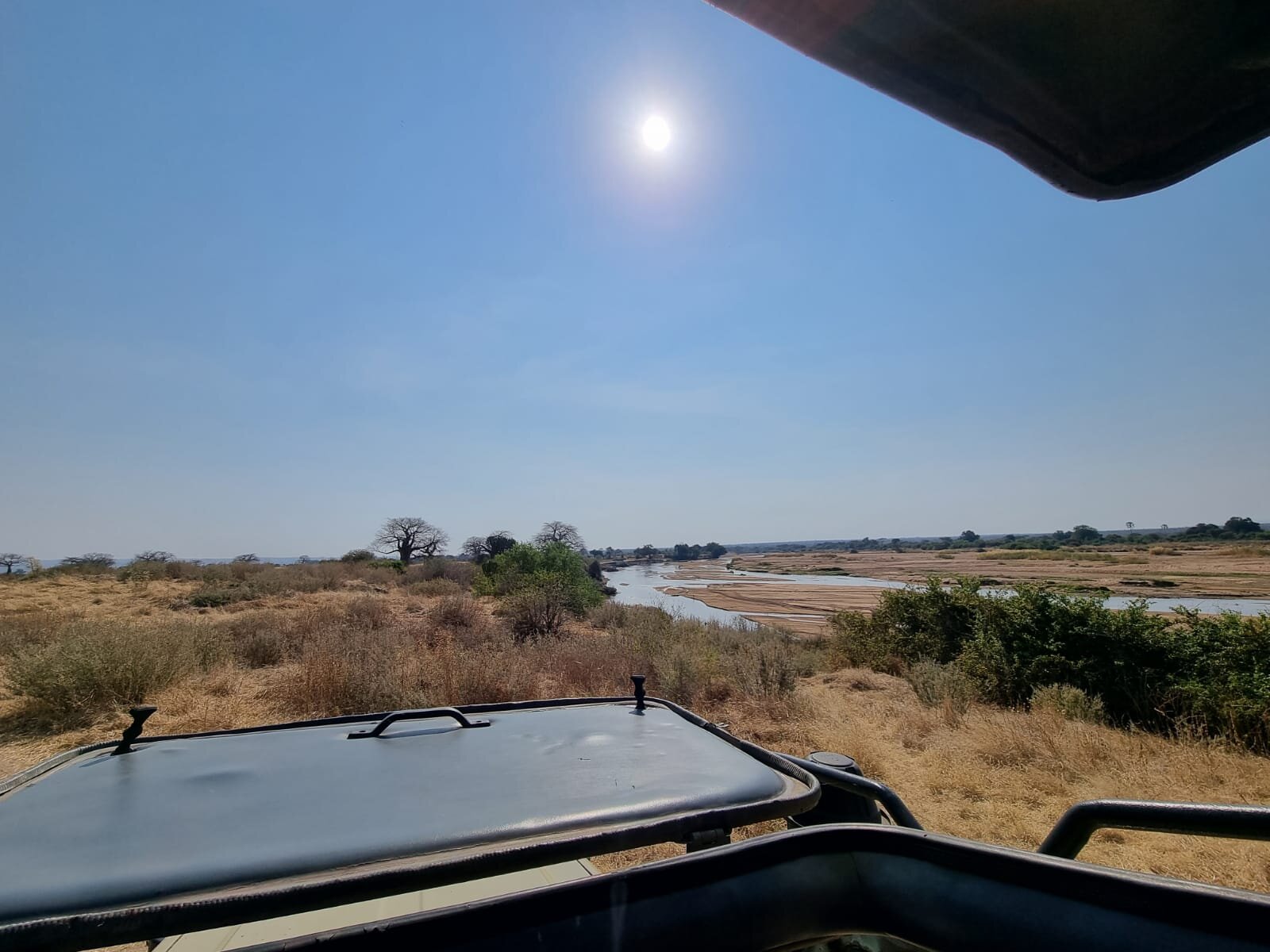
The Mwagusi Sand River is Ruaha’s most celebrated seasonal watercourse, a broad bed of pale sand that carries no surface water for much of the year yet holds it just beneath, where elephants dig their own wells. Its open sightlines and thick fringing bush make it the finest game-viewing corridor in the park. Ruaha is one of Tanzania’s largest national parks, in the south-central Iringa Region, and the anchor of the country’s quieter southern safari circuit.
What the Mwagusi Sand River Is on Safari
The Mwagusi is a tributary of the Great Ruaha, running through the central part of the park before joining the main river. Unlike a permanent watercourse, it is what is called a sand river: for most of the year its channel is a wide, flat expanse of pale sand with no water visible at all, looking more like a road than a river. Only in the rains does it run properly, sometimes with real force.
The trick is what lies below. Water persists beneath the sand long after the surface has dried, held in the bed like a hidden reservoir, and that buried water is what makes the Mwagusi so valuable to wildlife through the hardest months. So a watercourse that appears dead is in fact one of the most productive places in the park, which is the paradox at the heart of a Ruaha safari in this area.
Why the Mwagusi Is Ruaha’s Best Game Corridor
Several things combine to make the Mwagusi exceptional for game viewing. The open sand bed gives long, clear sightlines in both directions, so animals moving along or across it are visible at distance in a way they never are in thick bush. The banks are lined with larger trees and denser vegetation, which holds different species again, particularly leopards that use the cover and the branches.
Then there is the water beneath, which draws animals in through the dry months, and the shade of the bank trees, which they use through the heat. Add the fact that wildlife uses the open bed as a natural highway through the park, and you have a corridor where movement, cover, water and visibility all coincide. That is why guides work it so hard and why it consistently delivers on a Ruaha safari.
There is also a matter of scale that works in the visitor’s favour. A sand river concentrates activity into a narrow band, so instead of searching a vast park at random you are working a defined corridor where the odds are stacked. In a park of over twenty thousand square kilometres, that focus is worth a great deal, and it explains why a morning spent patiently along a few kilometres of the Mwagusi will usually beat a long drive ranging widely across open country. The corridor does the concentrating for you.
Elephants Digging for Water on Safari
The Mwagusi is the classic place to watch Ruaha’s most striking behaviour. As the dry season deepens, elephants use their trunks and front feet to excavate holes in the sandy bed, scooping down until water seeps up from beneath, then waiting for it to clear before drinking. The wells they create are neat, deliberate excavations, and the whole process shows real problem-solving.
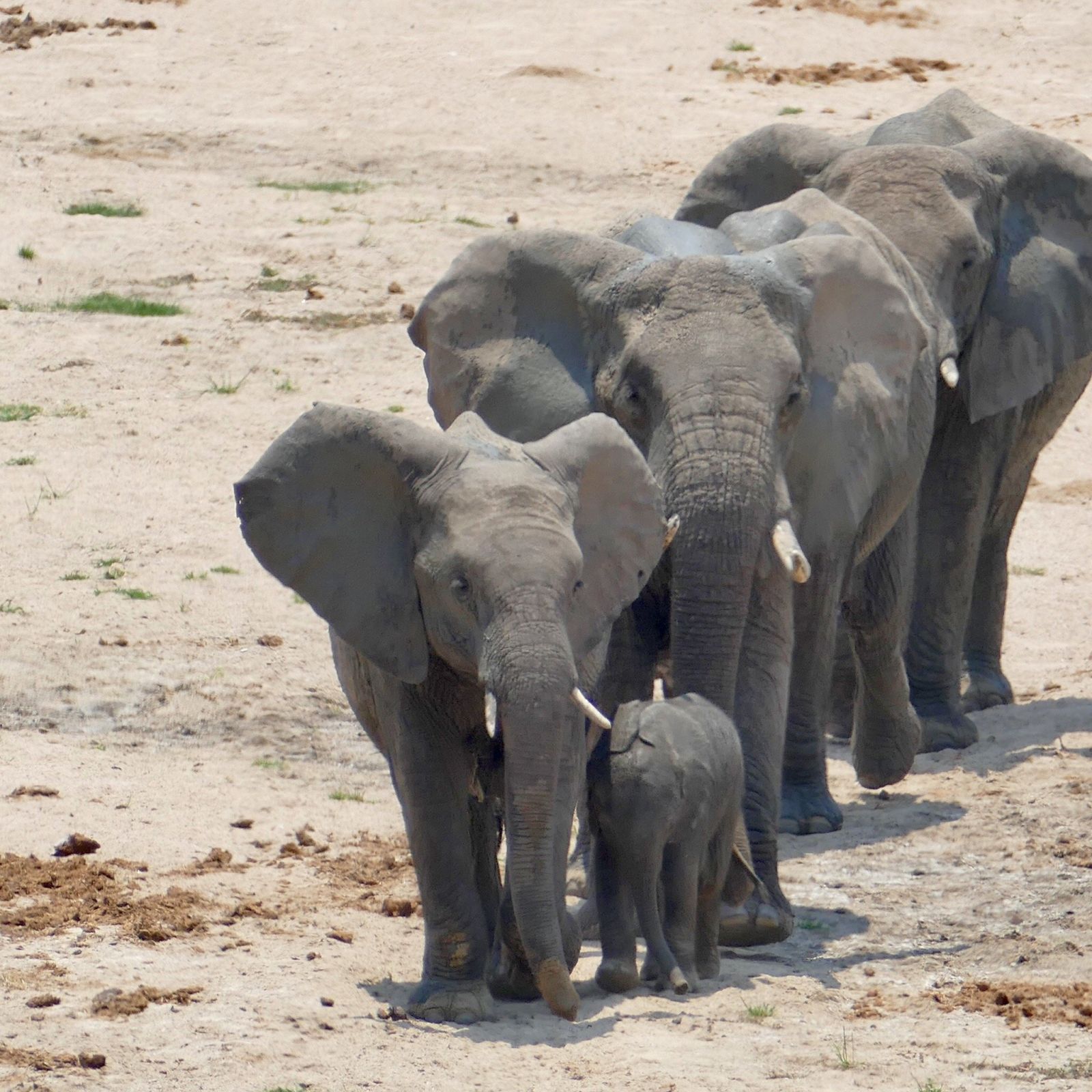
What follows is just as interesting. Once the elephants move on, other animals use the wells they have dug, so a single family group can end up providing water for a whole stretch of the valley. Impala, baboons, birds and other species come to drink at holes they could never have made themselves. Parking near an active digging site on a Ruaha safari often turns into a long, layered sighting as the bed fills with life.
A watercourse with no water in it, drawing more animals than the river it feeds. The Mwagusi holds its water under the sand, and the elephants know exactly how to reach it.
Wildlife Along the Mwagusi on a Ruaha Safari
The range of animals the Mwagusi produces is what makes its reputation. Elephants are the headline, both digging in the bed and moving along it in family groups. Lions use the corridor and the shade of its banks, and the open bed makes them easy to spot when they cross. Leopards favour the bank trees and broken ground, so this is among the better parts of the park to look for them.
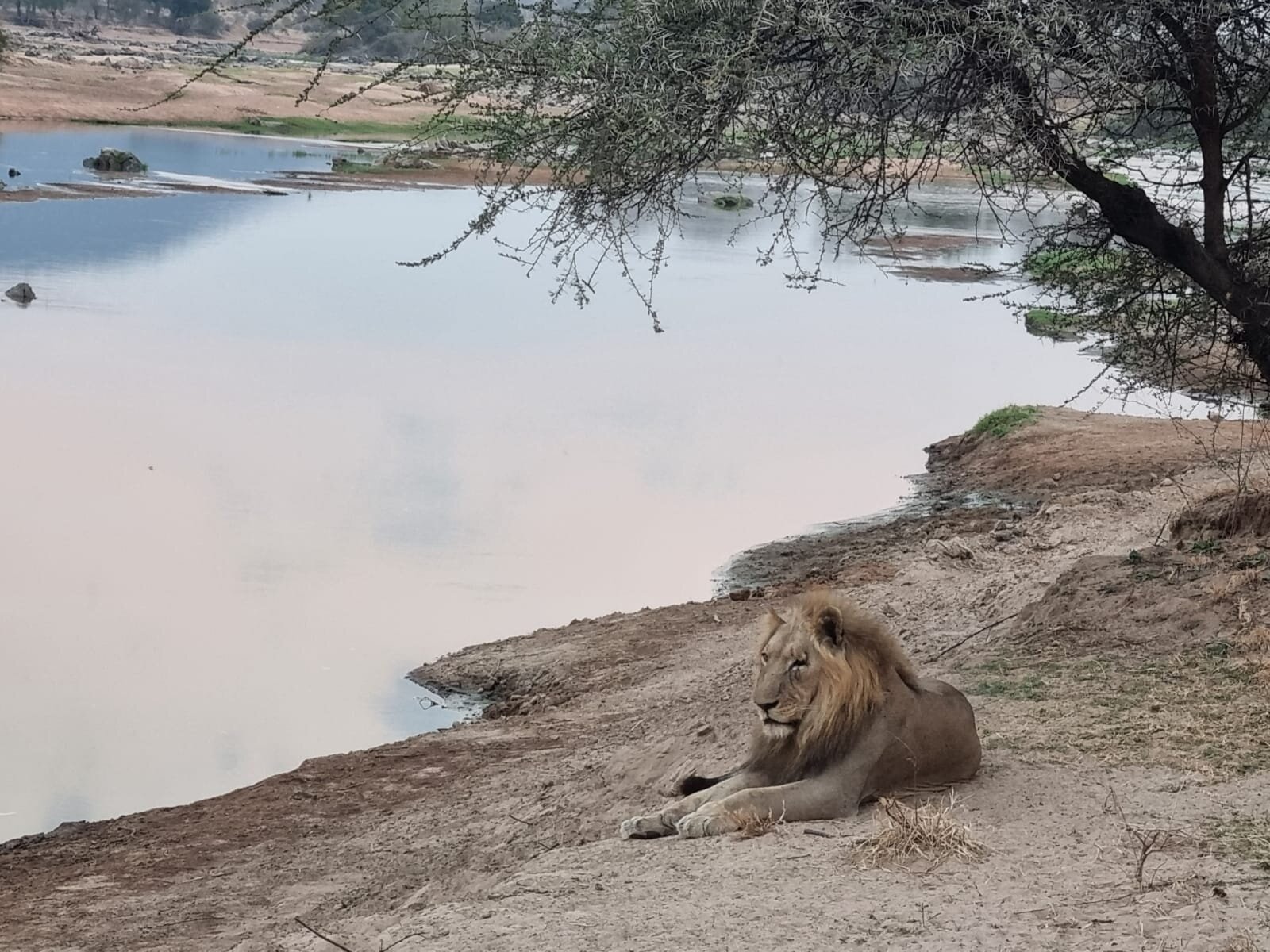
Beyond the predators, impala, kudu, giraffe, zebra and baboons all use the corridor, and buffalo pass through in herds. The bird life along the treed banks is strong, and the sand records the tracks of everything that has moved overnight, so even without a sighting the bed tells you what is about. It is this consistency across species that makes the Mwagusi the corridor guides return to on a Ruaha safari.
The tracks deserve a mention in their own right, because they turn a quiet drive into something interesting. Pale, fine sand takes an impression better than almost any surface, so a stretch of the bed reads like a record of the night: the neat double line of a leopard, the broader pad of a lion, the scuffed trails of a wild dog pack, the deep craters of elephants. A guide can tell you not just what passed but roughly when, and sometimes which direction to follow. Even on a morning when little shows itself, the Mwagusi tells you the park is busier than it looks.
Safari Camps on the Mwagusi Sand River
The Mwagusi’s productivity is reflected in where the camps are. Several of the park’s best-regarded places sit on or above this watercourse precisely because of the game it draws, and staying on it means the wildlife often comes to you between drives. A camp overlooking the sand bed lets you watch elephants dig from your veranda, or see game crossing while you eat.
The camps here range in style, from owner-run tented camps set right on the bank to more polished lodges perched on the rocky ground and escarpment above the drainage, which trade the intimacy of the bed for a wider outlook. Either way, being based on the Mwagusi puts you in the heart of the central game area, which is a strong argument for it when choosing where to stay on a Ruaha safari.
Driving and Walking the Mwagusi on Safari
Guides work the Mwagusi in two ways. By vehicle, the approach is to follow the bed or the tracks running parallel to it, moving slowly and stopping often, using the long sightlines to scan ahead and the bank vegetation to search for cats. In the dry season the firm sand allows driving in the bed itself in places, which puts you at the level of the animals using it.
On foot, with an armed ranger, the sand river is one of the best places in the park to walk. The bed holds tracks beautifully, so a guide can show you exactly what came through in the night, from hyena to wild dog to leopard, and read the story of the previous hours from the ground. Walking a sand river is among the most rewarding things to do on a Ruaha safari.
Best Time to Visit the Mwagusi Sand River on Safari
The dry season from June to October is unquestionably the time for the Mwagusi, and the peak from August to October is best of all. This is when the surface water elsewhere has gone, the elephants are actively digging in the bed, and the corridor pulls in wildlife from the surrounding country. The firm sand also makes driving in the bed possible, and the thin bush on the banks improves visibility.
In the green season from November to April, the Mwagusi may run with water, sometimes strongly, which is a fine sight but changes everything about how it works. The game disperses because water is available everywhere, the digging behaviour stops, and driving in the bed is no longer possible. So for the Mwagusi at its best, come in the dry months on your Ruaha safari.
Frequently Asked Questions
What is a sand river?
It is a seasonal watercourse whose bed is a broad expanse of sand carrying no surface water for much of the year, though water persists beneath the sand. The Mwagusi runs properly only in the rains. That buried water is what makes it so valuable to wildlife in the dry months, and what elephants dig down to reach.
Why is the Mwagusi good for game viewing?
Because open sightlines, cover, water and movement all coincide there. The flat sand bed lets you see animals at distance, the treed banks hold leopards and other species, the water beneath draws game through the dry season, and wildlife uses the open bed as a natural corridor through the park. Guides work it hard for these reasons.
Can you see elephants digging in the Mwagusi?
Yes, and it is the classic place for it. As the dry season deepens, elephants excavate holes in the sandy bed with their trunks and feet until water seeps up from below. Other animals then drink from the wells the elephants have dug. The behaviour is at its most active from August onward.
Can you walk along the Mwagusi?
Yes, where camps offer guided walking safaris, which are always led by an armed ranger. The sand bed holds tracks exceptionally well, so a guide can show you what passed through overnight and read the ground for you. It is one of the most rewarding places in the park to walk.
How much does it cost to visit the Mwagusi?
Visiting the Mwagusi is part of a normal Ruaha safari rather than a separate charge, though staying at a camp on it varies in price by tier. Park entry is currently around 30 US dollars per non-resident adult per 24 hours before 18 percent VAT. A guided walk carries its own fee, often around 20 to 40 dollars per person. Confirm current fees with TANAPA before you travel.
Plan Your Ruaha Safari
Being based on or near the Mwagusi, and having a guide who knows where the elephants are digging and where the leopards hold on the banks, is what makes this corridor deliver. The safari companies and tour operators listed on this website know the camps along this sand river and can place you where the game concentrates through the dry season.
Whether the budget is tight or open, the camp choice, drives, walks, flights and park bookings are handled in the background so none of the admin lands on you. Want a proper quote, or just a steer on camps along the Mwagusi? Reach out to the operators listed here, and a real person, not a bot, will get back to you.